Category: Blogs

  • The Fine Furniture of Bryn Hall

    The Fine Furniture of Bryn Hall

    The Fine Furniture of Bryn Hall

    Bryn Hall has gained a solid reputation not only for their products but for a high level of service which keeps customers returning and recommending Bryn Hall time and time again.

    These days the Bryn Hall legacy continues in the form of long-term business colleagues and friends, Reeve and Co Interiors.

    Bryn Hall is a prestigious brand ran by the Phillips family within the British antiques and reproduction furniture business. Here at Reeve & Co, we are proud to have worked extensively for them, manufacturing fine furniture to their exacting standards.

    Reeve & Co Interiors has made all the furniture for the Phillips family over the last 30 years. We started making furniture in the mid 80’s when the Reeve’s family were in the antique trade.

    The Reeve’s family had an antique shop in the early 1980’s in Debenham, Suffolk, which is historically famous for antiques in England. The Reeve’s family have worked on various projects within the trade, including TV programs like Lovejoy on the BBC.

    In the 1980s the antiques trade was extremely buoyant as there were not enough antiques on the market to satisfy demand, so the family gradually moved into reproduction and fine furniture to service the demand from Bryn hall and other customers around the world.

    To this day we continue manufacturing the best quality furniture including Bryn Hall designs, exquisite historical replicas and new, earnest, traditional designs.

    Without Bryn Hall’s dedication to outstanding customer service, enthusiasm and thoroughness we would not have the quantity of referrals and happy customers we have today. Customers from all over the country, especially the North, express interest in their timeless designs.

    Let me run through some of Bryn Halls classic ranges.

    Denbigh

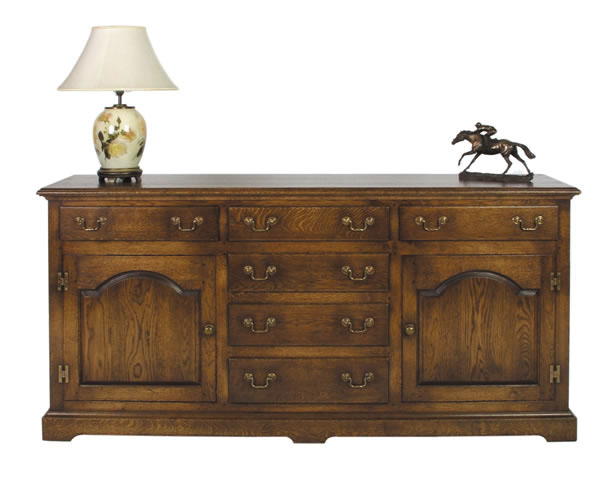
    Denbigh cabinets are a firm favourite encapsulating everything fine 18th century furniture should be. Strong solid features with plains of beautiful timber and traditional hand made construction. The Denbigh dresser base for instance has;

    • Raised and fielded panelled door fronts.
    • Framed side panels.
    • Cock beaded flat drawer fronts.
    • Moulded details below the top and above the doors.
    • Decorative moulded plinth and thumb nail profile to the top.
    • Solid ironmongery including exposed butt hinges, solid brass knobs and swan neck handles.
    • Beautifully made frame work precisely crafted around doors and drawers.
    • Decorative cut out to plinth.

    Oakamoor

    The Oakamoor range is a classic, chunky, wholesome furniture collection. Not too much decoration, its all about the wood and its simple, quality construction. For instance the Bryn Hall Oakamoor base has;

    • Simple historic frieze design framing the space between the legs.
    • Strong and substantial legs with a small bevel on the inside edge.
    • quality solid brass swan neck handles.
    • Traditional edge profile to the top with a simple decorative moulding below.
    • Plenty of width in front frame pieces to show off the beauty and patternation of Oak.

    Pendleton

    The Bryn Hall Pendleton Table is a traditional country table with simple rustic charm and timeless appeal. A popular choice with our customers, often opting for draw-leaves so they can entertain further guests whilst retaining space when not in use. The Pendleton has;

    • Quintessential farmhouse tapered legs
    • Optional Pendleton turned leg.
    • Large top suitable for dining or a kitchen table.
    • Available with various drawer options.

    Of course, these are details that are typical, but you can make it your own! We regularly make different door panel shapes, use different hardware or simply make the cabinet to bespoke sizes and materials.

    All our furniture is made to order. Every product is made to be tailored to your space and to match its surroundings if required. Bryn Hall always made sure the customer had the perfect piece for their home and were aware elements they could change about. As well as items made to order, our bespoke service can mean;

    • Pretty much an exact copy of a product you have seen in our catalogues, on our website or on socials, but with small tweaks such as different handles, thicker top or different shade.
    • A one of a kind piece amalgamating a range of details from your favourite furniture designs or a vivid idea from your head. Including carved details, unique turnings, storing particular items etc. Our designers can help you bring this to life.
    • Complete room scheme or project. i.e traditional or bespoke kitchens, full height panelled walls or bespoke contemporary cabinetry for bathrooms and hotels. These are all just examples but our portfolio is extremely diverse!

    Our Furniture is hand crafted in mostly Oak and Cherry, however we use a range of materials and can often source more exotic timbers or firm favourites like walnut and mahogany too. We also use modern materials and sheet materials to improve on strength and enhance decorative elements where necessary. This ensures that your furniture will be around for years to come, and ages beautifully.

    If you are unsure whether we can match your existing furniture, enquire today and we can supply some samples to put your mind at ease and show off our ability in the finishing department. We can match furniture that is 100 years old to new reproduction purchases made the year before.

    For more information, please contact us using our email sales@reeveco.atec.co.uk, or call us on 01449711782.

    Thanks,

  • Art Deco: Design Inspiration

    Art Deco: Design Inspiration

    Art Deco: Design Inspiration

    Art Deco style and design is iconic and distinctive. Derived from the refinements to aesthetics Art Nouveau provided before, 1920’s Art Deco incorporated new forms and phenomena from the era. These included the visual qualities of the machine and the positive effect they had on the landscape. This coincided with the ever-present admiration for quality natural materials, such as timber, gold and marble. The contrast between these two themes is fascinating and ultimately underpins the feel and look of Art Deco design.

    Art Deco furniture generally struck bold silhouettes and shapes. Square angular parts were balanced with slender bends and geometric curves and arches. A bias towards panelled sides and full shapes often resulted in a heavy aesthetic. This ran in parallel with the visual look of mass produced synthetic objects and machines that were changing industry. Importantly, the design principles applied to furniture was born from an admiration of man-made materials, systems and processes.

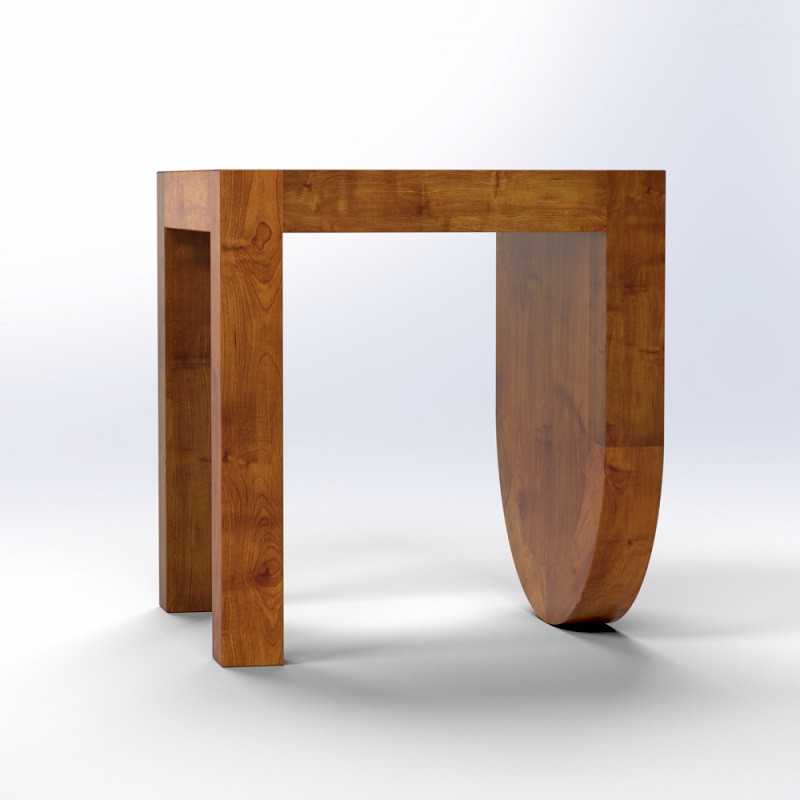
    Art Deco Lamp Table round leg side
    Art Deco Curved Leg Lamp Table in Cherry

    A further fundamental element of Art Deco was symbolic. Art Deco sought to symbolise high status and affluence in society. It did this by combining the newest developments in aesthetics but also incorporating luxurious materials. The 1920’s was prosperous for many cities and countries post World War 1. Increased disposable incomes allowed many to buy new technological wonders like cars and electronics. Art deco furniture didn’t just simulate the look of this prosperous time, but the feeling and grandeur everybody was aspiring to become. Its glamour and refined sophistication. Its not-so historical look and edgy demeanour was hip and trendy. Art Deco was a true reflection of a successful time commercially. The expression of this new surrounding for designers was built into Art Deco including furniture. Every shape and line literally stands up and out begging for attention and appreciation. Contrasts of colour and the gleam of glossy materials mimicked the buzz of a city centre or the allure of a glossy new car showroom.

    A characteristic many people love about Art Deco is its ability to stand up as fine art sculpture before being a functional piece. Motifs shapes and lines were so bold and compact that they often they could be mistaken for sculptures. Design principles and form often trumped function. But we love art deco for it. Art deco Products can add tons of fun and luxurious glamour to a space. It can set the tone for entertaining room feeling particularly at home in spaces for occasions such as bars and living areas or similar.

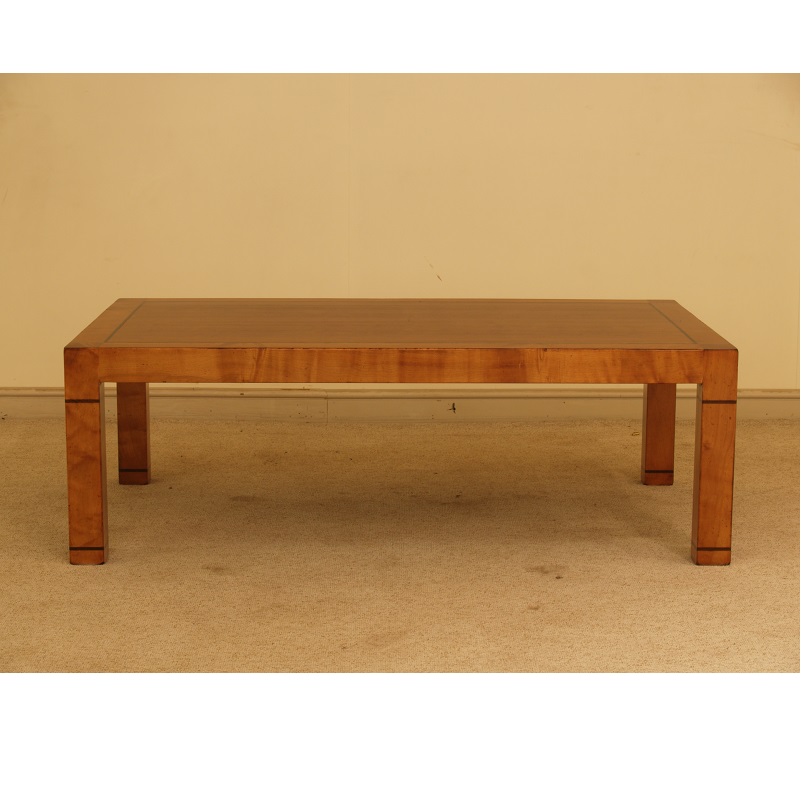
    Our staple Art Deco tables possess the flavour of the era incorporating many of the influences described; Strong geometric shape with clean lines and square edge profiles. Thick heavy legs and top resembling the heavy machinery and mass-produced objects of the day. Full panels allowing maximum surface area for the beauty of polished wood to be on show. Geometric inlays contrasting with natural hues of timber, such as brass inlay on dark oak or wenge inlay into cherry wood.

    Art Deco Coffee Table
    Art Deco Coffee Table

    Despite opulence and splendour being significant factors of art deco design, a recent trend has been to strip it right back within the hole interior context. Isolate a large art deco unit with a natural backdrop and let the expanse of panel and shapely profile un-complicate the space. Simple living and organised living is an important influencer and an art deco cabinet often has plenty of storage and clean aesthetic. Perfect pairing. Keep an eye out for it on Instagram. #simpleliving

  • 3 reasons bespoke is unequalled

    3 reasons bespoke is unequalled

    3 reasons bespoke is unequalled 

    “made for a particular customer or user” 

    Bespoke means the product is made completely to your specification, requirements, desires and needs. It means you are the sole focus of that object. Not marketability. Not how many can be made cost effectively. Not how much the designer likes it. It is what you want. And that’s a good thing. Unless you have awful taste.  

    Furniture is a personal thing. They are objects that encapsulate elements of your character and personality. Expressions of your outlook and philosophies on life. Intentions on how you want to live and wish to spend your time. Extensions of your individual or collaborative style. Everyone has different priorities and desires when it comes to furniture. Why not tick as many of them as possible? 

    Fitted Furniture 

    One of the most obvious but no less important positives of bespoke is fitted furniture. Fitted furniture means every inch of your space can be utilised. No home is the same as the other. Floor plans can be full of small alcoves and unique spaces. It can be tough to unlock their full potential. Typical examples of this are;  

    • Alcoves either side of a fireplace.  
    • Floor space below a bay window.   
    • Small third bedroom you want as an office. 

    If you have high ceilings and lots of space, any large wall can be a daunting task to fill to its greatest potential. Most importantly, to your exceedingly high standards. If we use the examples above for instance. Fireplace alcove could house bespoke fitted low-level cupboards from wall to wall. They could be colour matched to the existing wall colour or painted to compliment artwork hung above by a local artist you are fond of. Perhaps completely fitted isn’t your cup of tea and you wanted to add a bit of drama to these alcoves. A tall cabinet or display unit could sit in each alcove 50mm from each wall. Your maximising the potential of the space by making to measure without compromising on style or luxury.  

    Similarly, Bay windows love to give your room an interesting trapezoid shape that you are just not going to fill with a product off the shelf. However, a bespoke window seat with concealed storage could be a terrific addition. Maybe a light, refined bench at exactly the right height and length. A cover for the radiator that sits below. Or even a focal point for the room which can radiate beneath natural light. 

    Bespoke opens a world of possibility. Window shopping now becomes a free and inventive experience rather than shackled by the constraints of standard. 

    Colour Matching 

    Another important aspect of Bespoke and a point we touched on earlier is Colour. I have posted previously about painted finishes and the many ways they can be deployed. There are many companies out there who do offer a vast array of finishes and colours for furniture products, which is great. A full bespoke service can further than that.  

    Firstly, A bespoke cabinet can be any colour you so desire. It should also possess any other properties of the paint you prefer, such as sheen, and top coat surface. For instance sometimes the grain texture needs to show through paint, other times it’s a completely flat finish with gloss layer. On other occassions pieces are completely hand painted with visible brush strokes. It is all personal preference. Products which have a bias towards heritage and historical accuracy like ours are mostly hand painted. 

    Why you want a colour is personal choice and doesn’t need to be dictated to you. What objects in your space do you want compliment or accent. Do you relax in the space, chill, work hard or do you want it to be cosy and warm. Is there precious artwork in your home that needs elevating. Bespoke lets you decide. 

    Wood finishes are extremely popular at the minute, (Not that other peoples opinions should sway you). Reconditioning old pieces or building on an existing collection is gaining momentum. This is because old furniture was made better out of stronger materials. Bespoke will make it easy for you to carry on the themes of classic pieces you already have. Wood species and finish can be matched. Bespoke means you can have the look, feel and quality of your existing furniture with a new deliberate design for a particular function. Even though your bespoke product might look a hundred years old, it will be made to last two hundred years starting from day one.  

    Specialist input 

    Bespoke means that whatever decision you ultimately make, your set of criteria will be looked at by industry experts. A bespoke manufacturer will have seen everything. And if they havent, they’ll know a specialist who has. To provide the service of a bespoke, a manufacturer needs to have a network of specialist makers and designers who are passionate and know their trade inside out. Bespoke requires the breadth and depth of a trade. Not everyone can offer a bespoke service. 

    Of course, not everyone will instantly know what they want. Thye might have ideals. Maybe a colour scheme or even an inspirational image to aspire to. Often a budget. A designer reduces time wasted and cracks the whip. Well, they can lead you down a path showing you the sights and possibilities, let you smell the roses. The can show you what has worked in the past and suggest solutions to problems your facing.  

    Bespoke is a gift to yourself. Many believe that bespoke is simply a waste of money, but if you have a strong desire to possess luxurious, stylish and highly practical interiors, it’s a false economy not to go bespoke.  

  • Make your Dressing Room Look Great and Functional

    Make your Dressing Room Look Great and Functional

    Make your Dressing Room Look Great and Functional

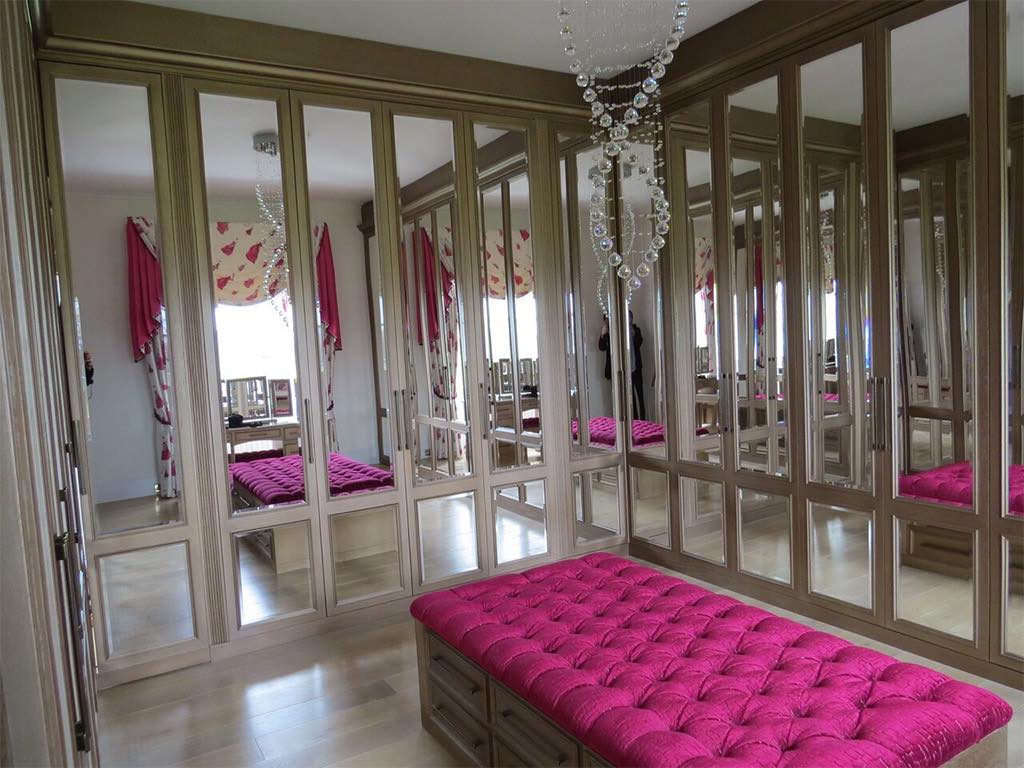
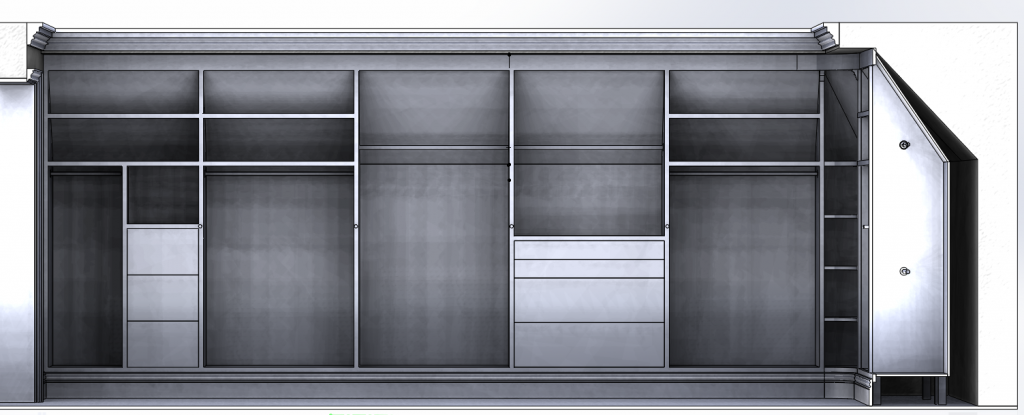
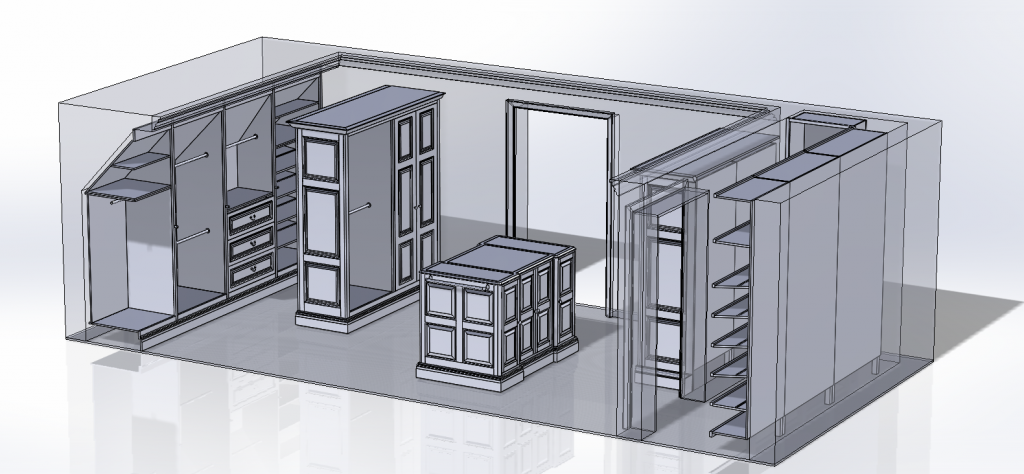
    Reeve and Co recently designed and manufactured a Dressing room for a grand house in Essex. It is a property we have undertaken extensive work within. We manufactured a large percentage of the timber products in the house such as; Wall panelling, fitted television cabinetry, six panelled doors, arched front door, bathroom cabinetry etc… the list goes on. We were very fortunate to have worked for these clients who have such a passionate appreciation for fine wood working and the beauty of Oak. However, The Dressing Room was to be different. It needed to be sophisticated and traditional like the rest of the house. It also needed to be highly functional, strike a contrast in paint and house lots of clothes. The space was also a bit more complicated. Situated on the top floor, we had the shapes of the roof structure to work around. We also had all the usual challenges scribing fitted cabinetry bring about. Understanding the brief, we set our Designers and Technicians to work, drafting up plans for the perfect stylish dressing room with maximum functionality.

    Assess the Clothing

    First phase is to assess the clothing. Our client is a fashion fanatic and has an abundance of clothes and long dresses. We knew she needed as much hanging space as possible including 1 module of full height hanging for longer pieces. Other things to consider were how much drawer space would be required for functionality as well as breaking up the space visually. Our client had enough space in their dressing room for a centre console. This meant she could have a wide bank of drawers within it for private storage and organising smaller items. This let the wardrobes house hanging items exclusively more or less. Shoe space was necessary for him. The room is rectangular. We elected the long stretch for her and the slightly shorter stretch for him. We dedicated one whole module to his shoes which allowed for plenty of space between pairs. There was a small room extending from the main dressing room which was dedicated to her shoes, (200 pairs roughly!). The small room was decked out head to toe in angled shelving perfect for displaying heels and shoes. Slightly taller section below for boots. We essentially had the ratio of all the hanging sections decided. Maximum hanging with 2 banks of drawers and some shelved top sections to break up the shapes. The higher shelved spaces are great for folded sweaters and clothing that is less regularly used. Where we could we added 2 hanging rails per module for double hanging potential.

    2018 11 12 3

    Space

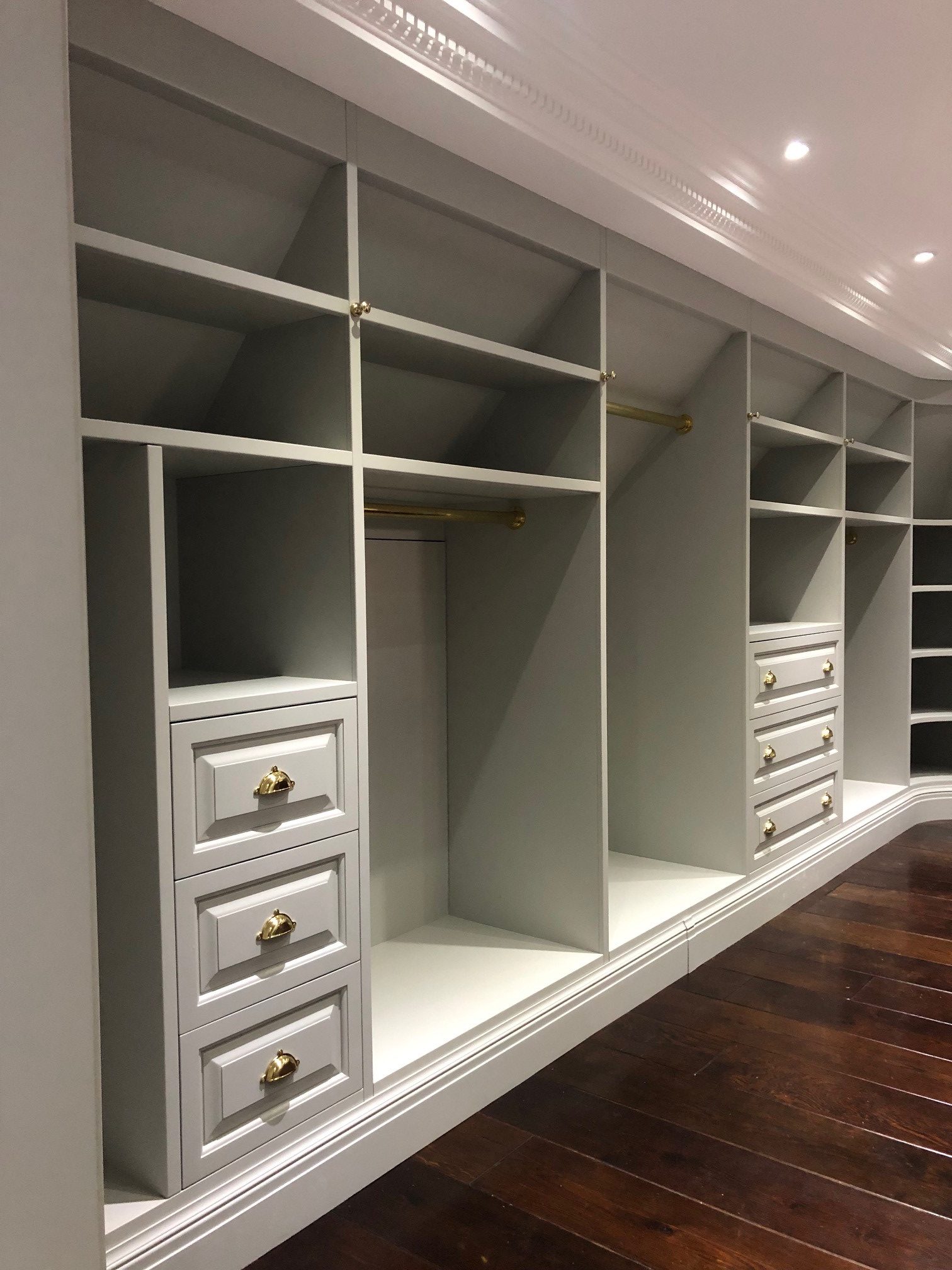
    The cabinetry was made with an emphasis on space. The need for it to house so many clothes. And the feeling of space, making sure such a potentially dense and busy room felt open and organised. Open wardrobes met these criteria. 32mm slender framework was used, maximising interior capacity. This is probably as slim as you could go before you started compromising cabinet integrity. We also needed to add hooks to the front frames so that potential outfit options could be isolated and considered, which is a really organised idea. You wont get too many hook options with back plates smaller than 32mm. The cabinets were made to an ample 580mm of available storage depth. The open front design also means that if a broad jacket or shirt did protrude it would still hang fine. It doesn’t look as scruffy as you might think if it does do this. We had a curved shelving tying each stretch together. This was designed so that it concealed a very complicated curved ceiling shape. It also provides a great decorative platform for objects. The curved cabinet in turn required curved framework and a curved plinth. These are the kind of details that are time consuming but look top quality when they are executed. They can soften an expanse of cabinets and add finesse and interest.

    Cohesive elements

    Further touches to consider were to bring elements of House into this room even though the overall finish and feel will be different. Mouldings used on doors and wall panelling were added to drawer fronts. Cornice profiles from bookcases and other fitted cabinetry were used here. All ironmongery was polished brass as the rest of the house. The colour was decided by the client. A still and calm grey which was light and airy, displayed the clothing perfectly. Didn’t suck the light out of the room or made any enclosed shelving spaces too dark.

    Personality

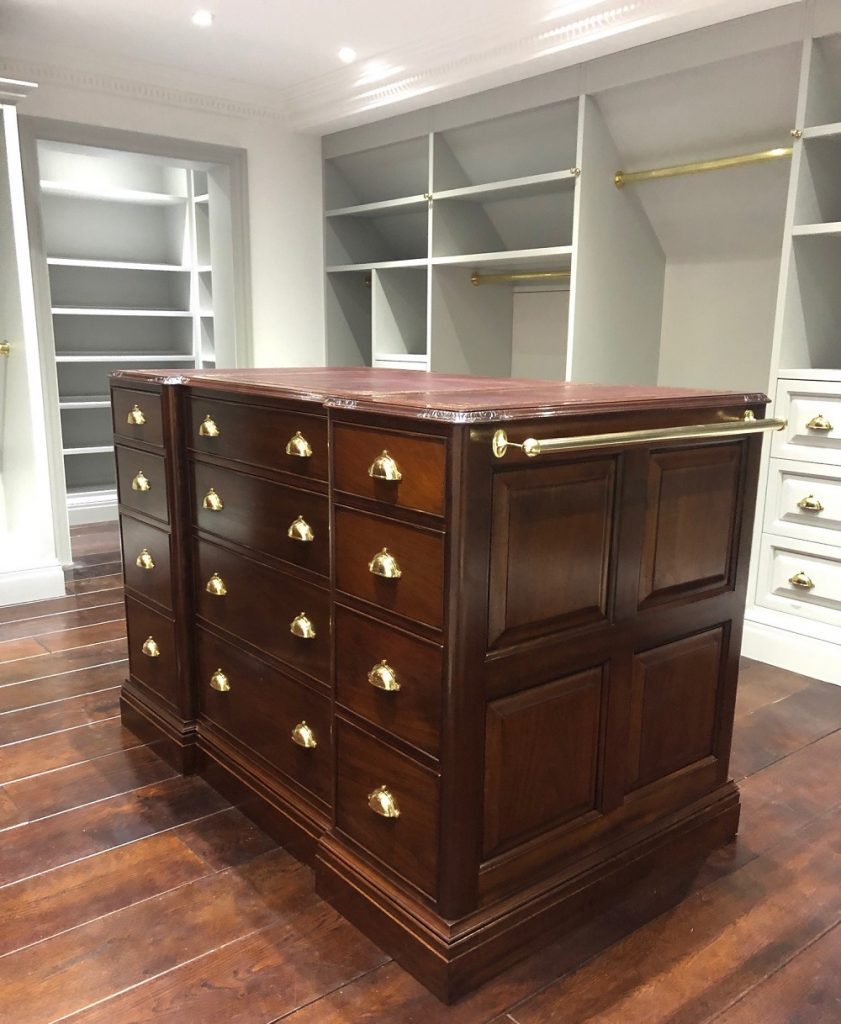
    The centre console was designed around an antique pedestal desk top that the customer acquired. It had leather set in, carved edge profile and some great marks of age. A litte bit of the customers pesonality and originality is a great touch. We extended the shape of the top straight to the floor. One side had a full set of drawers and the other had doors. The dark timber of the console brought the feel of the house into this fresh and simple dressing room. at 1080mm tall, it was perfect for setting outfits on or organising a bag. Again we continued to use similar mouldings and panel shapes seeking visual cohesion wherever possible. Narrow brass hanging rail fixed to each end meant chosen clothes could be kept neat but at hand.

    2019 02 06

    In Conclusion

    When contemplating a dressing room think function first, then make it beautiful. Analyse how much clothing you have and the requirements for each clothing category. Do you have a lot of hats or maybe a lot if suits? think about their storage requirements and what it takes to present them beautifully. Make a module to that effect. Secondly, think about your process in the morning and how you like to set up. Try and add a variety of hanging methods , over and above the wardrobe hanging rail. front mounted hooks, door hangers, external rack, centre console or table with a wide top etc. This will keep chosen items away from the crush of other clothes, keep items at hand and your chosen attire looking nicer. Thirdly, do not neglect the feel of the rest of your home in your endeavours. incorporate recurring themes and details into the design so any contrasting features will also feel like a natural progression.

    4 a

    Full description of this project including more joinery and cabinetry images can be seen on our case studies section soon.

  • Painted furniture ideas to update your space

    Painted furniture ideas to update your space

    Ideas to update your space with painted furniture

    Painted furniture can be the key to adding your personality to your home.

    Painted furniture isn’t anything new and colour charts can often leave you daunted. When you get painted furniture right it can make your whole home feel fresh and new.

    Bold.

    I thought I would head up the first idea about painted furniture with the most intimidating approach. Very often we can get sucked into very pale and natural hues and tones for every significant product in a room. This is fine and obviously has great appeal and feel. But you can elevate this, allowing them to provide a classic back drop for adventurous statement pieces and contrasting colours. Obviously, I don’t necessarily mean fluorescent crimson coffee table within your so far shabby chic styled living room. But why not? Think about what bold colours work in places you love and places you’ve seen. Apply them to your own design projects.

    Large plains of colour.

    This does require some confidence, but it can have an amazing impact. You have picked a colour you really love, and are going to paint all or one feature wall in that colour. In a moment of unadulterated impulse, you colour match all your painted cabinetry in the same colour as your walls tying them all together in a vast swathe of monochrome. It essentially gives you a more interesting and personally charged canvas to start adding too with your own objects. Painted furniture and doors add a third dimension to your normally flat walls rather than looking like you have placed furniture against them. Light and shade nuance a single colour influenced by the furniture you install.

    The trick to pulling this off is picking a colour that isn’t so subdued that such large amount of it will leave you feeling unfulfilled and disinterested. It cant be so bold it gives you a migraine or rejects any other creative moments you have in its proximity. A good strategy or starting point would be to start with a royal, dark or musky shade of a colour, such as dark blue or mustard. Then increase the brightness until it strikes the right chord and balance with you, your existing objects and your space. The British often get described as possessing a matching disease, but this approach most definitely turns heads.

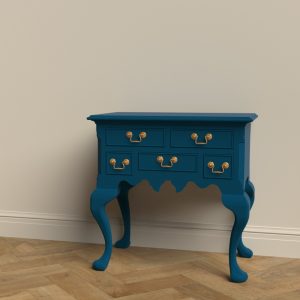
    painted low boy cobalt

    Breaking up paint with timber

    Here at Reeve and Co, we have a long history of manufacturing and supplying beautiful hardwood furniture, often Oak. We have a huge affinity and admiration for the character and depth of solid wood. However even we know that putting a material as gorgeous as Oak on a painted cabinet can elevate a piece. Celebrate its natural wonder. A painted Dresser can act as the perfect pedestal to show off the charms of pippy Oak. Either in the form of natural shelves or a dresser base top for instance. Mixing painted parts with timber or maybe other natural materials like stone, can create fun new shapes and styles. It can also highlight remarkable textures and patterns in your home.

    Painting internals.

    Finally, a more concealed approach to painting cabinets, but one no less effective when deployed. Painting the insides of cabinets whilst retaining the classic look and aesthetic to the outside. Very often we make painted cabinets which leave the internals natural such as a natural birch ply finish. However, I have seen an emphasis on making the inside painted and coloured even when it is always visible. Such as, glazed display units, open shelving, and bookcases for example.

    It’s a great opportunity to continue a theme but also to provide a zip of new colour and introduce a theme within an adjacent room, tying them all together. Think about what objects the cabinet normally displays or houses and what colour could compliment them. Even cabinets that get heavy use such as bookshelves or regularly store harsh heavy objects can have matt finish paints applied. Fear of it looking chipped and ruined quickly is not necessary due to new technologies and toughness of heavier grade paint.

    In Conclusion, when thinking about rejuvenating your home and are keen to add a splash of personality, fun and old fashioned charm, think about painted furniture options for inspiration. Having beautifully made and properly designed objects will ensure your painted furniture look better than ever, for longer.

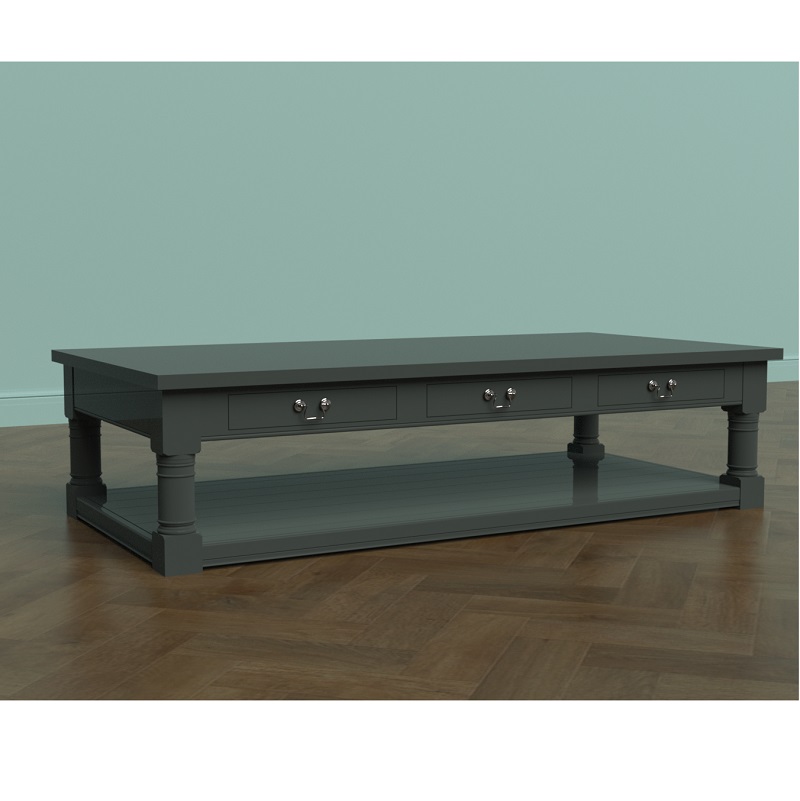
    Check out some of out painted furniture here including our 6 drawer Coffee Table and perfect Dresser.

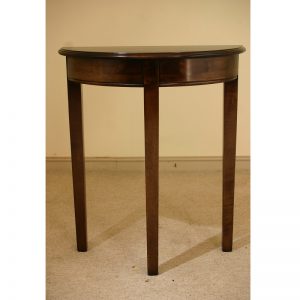
    STHR Cherry Three leg half rount side table

  • Reeve and Co Interiors, Your Order From Start to Finish

    Reeve and Co Interiors, Your Order From Start to Finish

    Reeve and Co Interiors produce the highest quality, handmade furniture and joinery products for many types of spaces.

    Our designs are mere starting points for discussion, we can adapt and modify designs to our customers individual requirements and taste. We pride ourselves on our personable service and adaptability. We rarely have two pieces leave the workshop with the same specification one after another. Of course, we have our staple products that look so great and in proportion that they are just made to our customers size requirements. You can rely on our experience and knowledge of this industry, supplying beautiful period furniture that will stand the test of time. Let me run through our process.

    We have an array of products suitable for the home, as well as commercial and office environments.

    Let’s say for instance you really love our open 2 drawer bookcases and you need somewhere to store your vast collection of novels. You are on the verge of ordering online, but in your heart of hearts, you want it shorter than shown online with 2 shelves and painted to match your new drinks stand that you bought from an antiques fair last weekend. Let us know, we can accommodate. If the changes are relatively simple, such as ironmongery or panel detailing we will just amend the order and adjust manufacture accordingly. In the case of our bespoke bookcase, the Designer will issue new drawings to you, so you can be confident in your decision, the construction and that the product still looks amazing. Colour samples will be sent out to you, so you can make sure the match is spot on. Our designers are always available to offer guidance in your decision-making process.

    Order is placed, you have put the delivery date in your diary, (6 to 8 weeks normally) and you are waiting with tense anticipation. Now the work starts for us. Firstly, A cutting list will be produced using our design software and archive of past cutting lists. Meanwhile, your chosen timber is selected by our experienced machinists working in the Mill. Typically, this will be Oak, Cherry, Mahogany or Walnut, however we have made many cabinets from lots of other species over the years. Depending on the finish you are hoping for, our machinists will be assessing timber thickness, how the board was sawn and character in the form of knots, pips, splits, burr, grain and medullary. The selected timber is then machined in accordance with the cutting list provided by Technical Staff. Timber will be squared up, ripped to width and planed to expose the nature and beauty within. Tenons will be cut, mortices punched, and rebates machined for jointing your piece. Finally, decorative mouldings will be machined if it can be from our extensive range of cutters.

    Once the machinists in the mill have refined long boards of wood into manageable components, the shape and form of the piece will begin to take shape. Every piece will take a different journey from here depending on its purpose. For instance, our Character Refectory Table consists of a stunning top made up of varied width characterful boards and some stocky canon shaped legs that need turning on a lathe. So, the top will move into the cabinet shop and the legs will make their way into the turning booth. Some products need decorative elements that can only be provided by the skilled and traditional labour of a carver. Once this has occurred final assembly of all components will be completed in the cabinet shop by our skilled and experienced Makers. The Cabinet Makers hand will be ensuring every joint is tight and strong. That every shape, cut out or moulding is precise and beautiful. That all moving parts and hardware move freely and easily. Your piece is now finished but ‘in the white’, meaning the final phase of prepping and finishing will now begin.

    Once the product arrives in the finishing shop the first step is to sand it down untill every surface is smooth and void of imperfections. Brown pieces are stained to the colour sample you will have approved and painted pieces will be primed ready for spraying colour in our spray booth. Typically, we then spray lacquer over stained pieces to add a protective layer, increasing the lifespan of your piece, reducing maintenance and adding a richness and lustre. Alternative finishes such as French polishing or oiling are also available.

    Finally, Quality Control cast their judgemental eyes over the piece checking for abnormalities. Everything leaving our workshop must be to the high standard we expect. Every single person that is part of the process understands this and is passionate about the end product. We lead out every cabinet with a full Mariachi band and confetti canons before being delivered.

    I hope this insight into the development and traditional manufacturing of our products has been interesting. Please feel free to contact us if you have any further questions.

  • Know the checklist for a Georgian Interior and create a classic living space

    Know the checklist for a Georgian Interior and create a classic living space

    The dynasty spanning all of the King Georges was lengthy and full of design influences. This can make putting your thumb on the precise makeup of a Georgian Interior hard to come by.


    The primary grounds for the Georgian style was a calming and muting of the grand opulence of Baroque. Many objects and artefacts varying significantly from one another appeared during the Georgian Reign, but the quintessential Georgian aesthetic was inspired by the work of Andrea Palladio two centuries before.

    Below are a few tips to ensure your interior has a sincere Georgian look and feel.


    The most important element is to focus on striking a balance between exquisite detailing and planes of colour and space. By this point the complete saturation of detail and the ornate in a room was fading and the trend was towards harnessing it and putting it on a pedestal. Namely a roman inspired pedestal with classic roman motifs and iconography.

    •  Pare down the colour palette

    Muted pastels, whites and creams with one dominant hue will calm down your interior and give it a strong Georgian persuasion. Licks of Gold and Brass should be present, but in moments, such as in Ironmongery, frames or formally presented sculptural items.


    •  Symmetry and order

    If you can draw a line down the centre of your space, preferably into a main focal point like a fireplace or large cabinet, and maintain symmetry with the objects populating it, you will be well on the way to a Georgian Interior. Equal quantities of chairs opposite one another. Bookcases or shelving in pairs. Leafed tables down the spine of the room. You do not need two of everything, just consider the detail, visible weight and finish of a piece and echo it along a line of symmetry.


    • Furniture

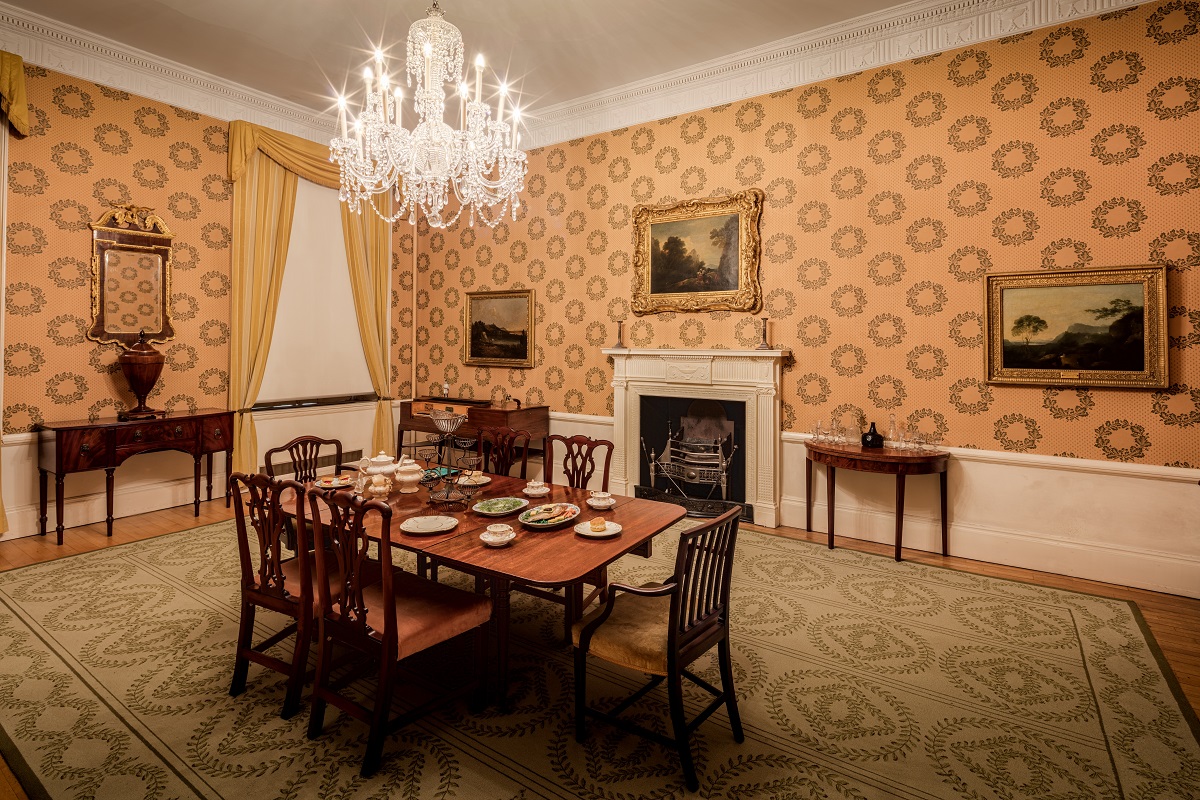
    Furniture was simple and elegant with simple cut-outs to their frames inspired by roman architecture. Legs were slender and refined, propping up bold tops with classic edge profiles. This Georgian Lowboy is a classic example. Floors would be wooden and naked with minimal decoration, allowing for dark stained tables and chairs to contrast and show off their silhouettes.

    For further inspiration see some of our classic Georgian pieces such as our Georgian Dresser Base, Georgian Bookcase, Lowboy and 3 Leg Half Round Side Table