Category: Blogs

  • Working with Architects on Bespoke Joinery: Our Collaborative Process

    Working with Architects on Bespoke Joinery: Our Collaborative Process

    Last updated: April 2026. By the Reeve & Co studio team.

    The architects we work with most often — in London, the Home Counties and East Anglia — want one thing from a joinery sub-contractor: a fabrication partner who can take a concept and deliver it to the standard the architect has drawn, on programme, with no surprises. This article is for architects who are considering Reeve & Co for a project, and explains exactly how we collaborate from first concept review through to handover.

    1. Why a joinery shop’s collaboration model matters

    Bespoke joinery is the trade where the architect’s vision either lands or fails. Unlike off-the-shelf packages, every joint, profile and finish is decided between the architect and the joinery shop. A poor sub-contractor will value-engineer the design without telling the architect; a good one flags buildability concerns at concept stage and offers solutions that protect the design intent.

    Our model is built around early architect engagement. We expect to be in the room (or on the call) at concept stage, not at tender.

    2. The 5 stages of our collaboration

    Stage 1 — Concept review (RIBA Stage 2/3)

    • The architect shares concept GA drawings and mood boards.
    • We mark up buildability concerns, suggest material substitutions where original spec is high-risk, and flag lead-time issues for any specialist veneers or stone.
    • Output: a 2–3 page memo back to the architect, no commercial commitment.

    Stage 2 — Tender response (RIBA Stage 4)

    • We respond to the architect’s tender package with itemised pricing, programme, and clearly-listed assumptions.
    • Where the spec is incomplete (e.g. ironmongery TBC), we price a placeholder and flag the gap.
    • We do not undercut on price to win — PCL clients pay for substance.

    Stage 3 — Shop drawings (RIBA Stage 4 detailed)

    • 1:5 and 1:1 details for every joinery junction, issued in PDF and DWG.
    • Architect-comment cycle: we expect 2 review rounds before drawings are frozen.
    • Once frozen, design changes trigger a formal variation; this protects programme.

    Stage 4 — Workshop fabrication (RIBA Stage 5)

    • Fabrication in our Suffolk workshop. Hand-cut joints on visible carpentry, traditional finishes for heritage work, hand-rubbed lacquer or polyester for contemporary.
    • For complex elements (curved staircases, large panelling runs), we build a workshop mock-up and invite the architect to inspect before delivery.
    • Each piece is photographed and tagged for installation reference.

    Stage 5 — Site installation & handover (RIBA Stage 5/6)

    • Our install crews are directly employed (not subcontracted), CSCS-carded, and briefed on the architect’s tolerances before they leave the workshop.
    • We attend snag walks with the architect and project manager, and clear the punch list within 10 working days.
    • We retain finish samples and offcuts for any post-completion query.

    3. BIM, Revit and CAD compatibility

    We accept architect-issued drawings in the following formats:

    • 2D CAD — AutoCAD DWG (latest 3 versions), DXF, PDF.
    • 3D / BIM — Revit (RVT, IFC export), SketchUp, Rhino. We do not author the central model but federate our shop drawings as IFC for the BIM coordinator.
    • Drawing standards — we work to BS 1192 / ISO 19650 naming conventions on Tier 1 sites.

    4. What we expect from an architect’s tender package

    To respond well at tender stage, we ask architects to include:

    • GA drawings at 1:50 and key elevations at 1:20.
    • An indicative finishes schedule (timber species, paint codes, ironmongery brand).
    • Programme constraints — key dates, access windows, snagging windows.
    • The Tier 0 main contractor (if appointed) — this affects our pre-qualification pack.
    • Any planning or LBC conditions affecting joinery.

    5. Recent architect-led projects

    Working with Reeve & Co

    We currently have capacity to engage on 2–3 new architect-led projects per quarter. If you are an architect with a residential or commercial joinery package coming up in London, the Home Counties or East Anglia, we would be glad to share our pre-qualification pack and a sample of recent shop drawings.

    Contact the studio to start the conversation.

  • Tier 1 Joinery for Prime Central London: What HNW Clients and Architects Should Specify

    Tier 1 Joinery for Prime Central London: What HNW Clients and Architects Should Specify

    Last updated: April 2026. By the Reeve & Co studio team.

    “Tier 1” is a term construction managers use to describe their top tier of trades — the contractors and sub-contractors they will allow on a Prime Central London (PCL) job that is insured, scrutinised and watched by the client every week. For bespoke joinery, the Tier 1 standard is the minimum expectation on most projects in Mayfair, Belgravia, Knightsbridge, Chelsea, Kensington, Marylebone and St John’s Wood.

    This article sets out what Tier 1 actually means for a joinery package in PCL, what HNW clients and architects should look for, and how the workflow differs from a standard residential commission.

    1. The PCL boroughs and what makes them different

    PCL is loosely defined as the seven postcode clusters where average residential prices exceed £2,500 per sq ft: Mayfair, Belgravia, Knightsbridge, Chelsea, Kensington, Marylebone and St John’s Wood. Three things distinguish a joinery commission in these boroughs from any other UK address:

    • Building stock — mostly Georgian or Victorian terraces, frequently listed, in conservation areas, with stringent local-authority controls (City of Westminster and Royal Borough of Kensington & Chelsea are the strictest in England).
    • Construction managers run the site — firms like Walter Lilly, Faithdean, Knowles, R W Armstrong, 4C, Broadland and West Green operate as the “Tier 0” on these jobs and pre-vet every supplier.
    • Client expectations — HNW clients typically have an architect, an interior designer and a project manager all reviewing the joinery package. Tolerance for snags is near zero.

    2. What “Tier 1” means in practice

    When a Tier 0 main contractor calls a joinery shop “Tier 1”, they mean the shop has demonstrably cleared all of these:

    • £10m public liability insurance as a minimum — many PCL projects ask for £25m.
    • £5m+ professional indemnity covering bespoke design.
    • Independent vetting — financial accounts, CIS/HMRC standing, GDPR compliance, modern slavery policy, and at least two reference projects on similar PCL addresses within the last 24 months.
    • Health & safety — CHAS or SafeContractor accreditation, full RAMS for every install package.
    • Lead-time discipline — the joinery programme integrates into a master programme with weekly lookahead reviews. Slippage on a PCL job costs the client £5k–£25k a week in extension-of-time and prelims.
    • Finish standards — visible joinery is hand-finished to a level that survives white-glove handover. This includes proper grain matching across panel runs, no visible fixings, French-polish or hand-rubbed lacquer rather than spray-only.

    3. Materials and finishes that pass white-glove

    Across our PCL projects, the recurring specifications include:

    • Quarter-sawn European oak, walnut or American black walnut — consistent grain, dimensional stability.
    • Solid versus veneer — solid stock for visible structural members, premium veneers (1.0mm+) on large flat panels to maintain grain match.
    • French polishing — on heritage projects and most reception-room joinery. Done in our workshop, not on site.
    • Hand-rubbed lacquer — for contemporary kitchens and wardrobes; we use a 7-stage process with sanding between coats.
    • High-gloss polyester — for piano-finish kitchens and feature panels. Demands a workshop with strict humidity and dust control.
    • Ironmongery — typically Joseph Giles, Samuel Heath, or bespoke pieces sourced through Cox London or A&H Brass.

    4. The CAD-to-installation workflow we use on PCL

    1. Concept review — we sit with the architect and interior designer, mark up the GA drawings, flag buildability and lead-time issues before tender.
    2. Tender response — itemised price, programme, and value-engineering options. We never tender below cost; clients pay for our depth on PCL.
    3. Shop drawings — 1:5 and 1:1 details for every junction. Issued for architect & designer comment, then frozen.
    4. Workshop fabrication — in our Suffolk workshop. Each piece tagged, photographed, and packaged for transit.
    5. Site delivery & install — our two-man install crews on PCL jobs are directly employed (not subcontracted) and CSCS-carded.
    6. Snag & handover — we attend the snag walk with the project manager, agree the punch list on the day, return within 10 working days to clear it.

    5. Selected PCL projects

    Specifying a Tier 1 joinery package in PCL

    If you are an architect, interior designer or main contractor specifying a joinery package in any of the seven PCL boroughs, we are happy to issue our pre-qualification pack — insurance, accreditations, recent project references and shop-drawing samples — on first contact, with no commercial commitment.

    Contact the studio to request the pack.

  • Bespoke Joinery for Listed Buildings: A 2026 Guide to Listed Building Consent

    Bespoke Joinery for Listed Buildings: A 2026 Guide to Listed Building Consent

    Last updated: April 2026. By the Reeve & Co studio team.

    Around 500,000 listed buildings stand in England alone, and demand from private clients to refurbish them sympathetically has not slowed. For architects and owners specifying bespoke joinery in a listed property, the brief is fundamentally different: every door, window, panel and staircase you replace or alter is governed by Listed Building Consent (LBC), and getting it wrong is a criminal offence under the Planning (Listed Buildings and Conservation Areas) Act 1990.

    This guide is written for the architects, project managers and end clients we work with at Reeve & Co on Grade I and Grade II listed projects across London, the Home Counties and East Anglia. It covers the consent process, the material and detailing standards heritage officers expect, and a practical 4-stage workflow that keeps a listed-property joinery package on programme.

    1. Listed Building Consent: what counts as “works”

    LBC is required for any work that affects the special architectural or historic interest of a listed building. In a joinery context, this almost always includes:

    • Replacing or repairing original windows, doors, shutters, panelling or staircases
    • Adding new internal joinery (libraries, wardrobes, kitchens) where it abuts historic fabric
    • Cutting into beams, plaster or skirting to install services or fixings
    • Stripping or re-staining historic timberwork

    Even like-for-like replacement of a rotten window is consentable: the Council’s heritage officer must agree the new design matches the original profile, glass, ironmongery and finish. Householder permitted-development rights do not apply on listed properties (gov.uk — planning permission).

    2. Grade I vs II vs II*: what changes

    Grade % of stock Practical impact on joinery
    Grade I ~2.5% Highest scrutiny. Expect a pre-application meeting, full historic-fabric survey, and Historic England as a statutory consultee.
    Grade II* ~5.8% Historic England consulted on most material changes. Treat exactly like Grade I in design intent.
    Grade II ~91.7% LBC still required. Local-authority heritage officer is decision-maker. Generally more flexible on internal joinery away from principal rooms.

    3. Materials, profiles and finishes the heritage officer wants to see

    From our experience working with Westminster, Kensington & Chelsea, City of London and East Suffolk councils, here is what consistently passes:

    • Timber species matched to original — quarter-sawn European oak, Douglas fir, or pitch pine for Georgian/Victorian fabric. Engineered substitutes are usually rejected on Grade I/II*.
    • Hand-cut joints on visible carpentry — mortice & tenon, dovetails, scarf joints. Pocket-screw construction is a fast rejection.
    • Section profiles drawn from a physical sample — we always remove a small profile sample of the original moulding, scan it and recut tooling to match.
    • Glass — cylinder or restoration glass for pre-1900 windows. Modern float glass disqualifies the application on principal elevations.
    • Ironmongery — either retained originals refurbished, or hand-forged replacements with the correct era’s hinge geometry.
    • Finishes — traditional linseed-oil paint or shellac on principal joinery; modern acrylics are rarely accepted.

    4. The Part L exemption (and where it doesn’t apply)

    Approved Document L of the Building Regulations governs energy efficiency — including U-values for windows and doors. For listed buildings there is a partial exemption: replacement windows and doors do not have to meet the standard 1.4 W/m²K target where compliance would “unacceptably alter their character or appearance”. This is the legal basis on which we routinely supply single-glazed Crittall replacements, slim-profile sashes and historic timber doors that would otherwise fail Part L.

    The exemption does not remove the requirement entirely — you must demonstrate that compliance is unreasonable, and most councils now expect a Heritage Statement supporting that argument. We typically draft this section of the supporting statement for our clients.

    5. Our 4-stage workflow on listed-building joinery packages

    1. Survey & profile capture — on-site measurement, profile templates, photographic record, condition report. We share the survey pack with the architect within 5 working days.
    2. Shop drawings & Heritage Statement input — 1:5 and 1:1 details for every junction, ready to drop into the LBC application. We support the architect with the drawings the heritage officer will ask for.
    3. Workshop fabrication — in our Suffolk workshop. Hand-cut joints, traditional finishes, full mock-up of any complex element (curved staircases, panelling) prior to delivery.
    4. Site installation & sign-off — our installers liaise directly with the conservation officer for inspections. We retain offcuts and finish samples for any post-completion query.

    6. Selected listed-building projects

    Recent Reeve & Co listed-building work includes:

    Specifying joinery on a listed property

    If you are an architect or owner working on a listed-building joinery package, we provide free fabrication-led design review at concept stage, before LBC is submitted. This is the cheapest moment to fix detailing problems that would otherwise come back as a refusal or condition.

    Contact the studio for a portfolio of recent listed-building work and a fee proposal for your project.

  • From Brief to Installation – How Professional Bespoke Joinery workshops Work

    From Brief to Installation – How Professional Bespoke Joinery workshops Work

    The Process Matters

    If you’ve worked with a joinery studio that didn’t have a clear process, you know the cost: scope creep, missed deadlines, assumptions that weren’t documented, and frustration on both sides. The best bespoke makers follow a structured methodology, not because it’s rigid, but because it works. It keeps projects on track, manages costs, and ensures your design intent doesn’t get lost in translation between drawing and finished piece.

    Here’s what a professional process looks like from Reeve & Co Interiors.

    Phase 1: The Initial Consultation and Site Visit

    This phase shouldn’t feel like a sales meeting. It’s a discovery conversation.

    A proper bespoke studio will ask detailed questions: How does your client actually use the space? What’s the room’s natural light like? Are there structural constraints,” wonky walls, sloping ceilings, existing services (plumbing, electrical)? What’s the interior aesthetic you’re pursuing? What’s the budget range and project timeline?

    They’ll visit the space themselves. They’ll take photographs, measure carefully (ideally with laser tools for accuracy), and note the challenges the space presents. They’re not just collecting dimensions; they’re understanding the context in which this joinery will live.

    For architects and designers: This visit should include you or clear documentation of the project’s requirements. Walk the space together if possible. You’ll catch misunderstandings early.

    They’ll also discuss materials and finishes at this stage. Solid wood or veneered board? What wood species? What finish ”painted, stained, natural oil? What about hardware ”handles, hinges, soft-close mechanisms? These aren’t abstract choices. They affect cost, durability, and whether the joinery will harmonise with the rest of the interior.

    Cost emerges from this conversation too. A studio should give a realistic estimate range based on complexity and material choices. They won’t lock in a final quote until designs are approved, but you should have a framework: £5,000? £50,000? £500,000?

    Phase 2: Design Development and Drawings

    Once the studio understands the brief, they’ll produce initial conceptual sketches. These should reflect your design direction and address the constraints you’ve discussed. You’ll review, iterate, and refine.

    This is iterative. Materials might change. A shelving run might shift to accommodate a radiator. Hardware choices might evolve as you see options. Good studios expect “2 rounds of revision at this stage. They’re not defensive about changes; they’re collaborative.

    Once concepts are approved, the studio produces detailed technical drawings. These are precise:” every dimension specified, every joint detailed, every mounting system noted. In a professional practice, these should be production-ready: CNC programming, cutting plans, and assembly instructions. Nothing left ambiguous.

    For architects: Many studios now produce 3D visualisations alongside technical drawings. This does two things: it gives your client a clear sense of the finished product, and it catches design issues before manufacturing begins. You can see whether proportions feel right, whether colours harmonise, and whether the joinery integrates with the wider interior.

    Once drawings are approved, they’re locked. Changes after this point cost time and money. A professional studio will be clear about this boundary, ”not to be difficult, but because manufacturing is scheduled, materials are ordered, and changes have ripple effects.

    Phase 3: Material Sourcing and Manufacturing

    This phase is where the studio’s craftsmanship becomes visible.

    Board preparation and cutting. If the project uses manufactured board (plywood, MDF, veneer), the studio optimizes cutting plans to minimize waste and cost. Modern operations use CAD-generated cutting lists to ensure accuracy.

    Edge-banding and finishing. Exposed edges on veneered board are banded, typically with iron-on edging machines that apply matching veneer or solid wood trim. This is detail work that separates adequate from excellent joinery. Poorly banded edges look cheap; well-executed edges look crafted.

    CNC machining. For anything more complex than straight cuts, mortices, dowel holes, intricate curves, and inlays, modern studios use 5-axis CNC machinery. This is programmed directly from the technical drawings, ensuring precision and the ability to replicate complex details exactly.

    Assembly and dry-fit. Components are assembled without glue to verify fit. Adjustments are made at this stage, not on site. The studio is checking that doors hang true, that drawers slide smoothly, and that panels fit without gaps.

    Finishing. Depending on the specification: eggshell or matt paint finishes, wood stains and oil finishes, varnish or lacquer. This is where a good studio shows real skill. Finish quality makes or breaks the perception of joinery. Cheap finishes look cheap.

    What you need to know: A professional studio will provide regular updates, photographs of work in progress, and notifications when your project moves through each phase. You shouldn’t be in the dark, wondering where things stand.

    Phase 4: Quality Control and Inspection

    Before anything ships, a reputable studio conducts a thorough inspection. Are the dimensions correct? Do doors and drawers operate smoothly? Are finishes immaculate? Are all components complete?

    For significant projects, a studio might invite you to a pre-delivery inspection. You can sign off that everything matches the approved drawings before it leaves the workshop. This is valuable; it catches issues in a controlled environment, not mid-installation on site.

    Phase 5: Logistics and Installation

    Bespoke pieces are often large and delicate. A good studio has planned logistics: How will components get to the site? Are the stairs wide enough? Does anything need to be taken apart for installation and reassembled on-site?

    Professional installation is crucial. The joinery might be perfect, but poor installation ruins it. Qualified installers ensure pieces are level, plumb, and secure. They understand how to manage cut-outs for services (if needed), how to integrate with existing elements, and how to leave the space clean and ready for the client.

    For architects: You’ll want to specify that the contractor who installs the joinery has demonstrated experience. This isn’t a task for a general handyman. It requires skill and care.

    Phase 6: Handover and Aftercare

    Once installed, a professional studio will walk you through the project. They’ll demonstrate hardware, explain maintenance, and address any questions. They should provide documentation: care instructions, warranty information, details of what was specified and how to maintain finishes.

    Good studios stand behind their work. If an issue arises in the months following installation, they’ll address loose hinges, a finish that needs attention, or anything that didn’t meet the specifications.

    Managing the Timeline and Budget

    Projects move faster when everyone’s clear on the process. Reeve & Co interiors typical timescales:

    • Brief and site visit: 2 weeks
    • Initial design and approval: 4 weeks
    • Technical drawings and final approval: 3 weeks
    • Material sourcing: 2 weeks (varies by materials and lead times)
    • Manufacturing: 8 weeks (depends on complexity; large kitchens or fitted wardrobes take longer)
    • Quality control and delivery: 2 weeks
    • Installation: 4 weeks (depends on scope; a fitted wardrobe might take a week; a whole kitchen with electrical and plumbing integration might take longer)

    Total timeline: 20 weeks from brief to installation, depending on scope and complexity.

    Budget certainty comes from clarity. Once designs are approved and locked, costs should be transparent and fixed (barring specification changes from the designer or client).

    Working with Your Joinery Partner

    The best outcomes happen when designers treat their joinery studio as a true partner:

    Feed them good briefs. The more detailed and clear your initial brief, the better the solutions they produce. Share design boards, material samples, inspiration, and functional requirements.

    Visit the workshop if possible. You’ll understand the capabilities and see the quality standard they maintain.

    Approve designs decisively. Once you’ve signed off drawings, hold them. Changes after this point disrupt schedules and add cost.

    Coordinate installation carefully. Work with your main contractor or project manager to ensure the joinery installation slot is protected in the schedule, that the space is ready for it, and that other trades (painting, flooring, lighting) are sequenced correctly around it.

    Trust the expertise. If a studio suggests a material or construction approach you hadn’t considered, listen. They’ve solved hundreds of problems. Their recommendations usually improve the outcome.

    Why This Matters

    Bespoke joinery is a significant line item in a residential project. But when it’s specified and executed well, it becomes one of the highest-value elements. It transforms how the space feels and performs. And it lasts. Good joinery outlives trends and improves with age.

    The process matters because it’s what stands between a brilliant design concept and a disappointing execution. The studios that invest in clear, collaborative processes that take time to understand your brief, that communicate regularly, that manage expectations professionally, deliver joinery that justifies the cost and reinforce your reputation as a designer or architect.

    Send an email to design@reeveco.atec.co.uk to get further help from our designers at Reeve & Co interiors

  • Why Architects and Interior Designers Need a Bespoke Joinery Partner

    Why Architects and Interior Designers Need a Bespoke Joinery Partner

    The Problem with Standard Solutions

    If you’re an architect or interior designer who’s ever worked with a client in a Georgian townhouse with uneven walls, or a Victorian property where every ceiling height shifts by a centimetre, not millimetres, you already know the frustration. Off-the-shelf kitchen or joinery companies arrive with their standard 600mm units. High street furniture showrooms offer limited finishes in preset dimensions. None of it quite works. And your design, the one that would solve the client’s storage problem elegantly, that would align perfectly with the period character, that would work with the structural realities of the space, gets compromised.

    Good bespoke joinery from Reeve & Co interiors changes that equation entirely.

    What Architects and Designers Are Actually Looking For

    From conversations with practices across London and the Home Counties, certain priorities emerge consistently when designers specify joinery:

    Precision that matches the design intent. You’ve spent weeks refining a detail. You’ve resolved how a run of wardrobes will integrate with a fireplace, how shelving will frame a window, where storage needs to hide and where it becomes a design feature. You need a workshop that understands technical drawings at the millimetre level, not as approximate guidance, but as specification.

    The ability to work with constraints. Real houses have structural quirks: floors that slope, walls that lean, and ceiling heights that vary. Rather than fighting these, true bespoke joinery works with them. A kitchen isn’t squeezed into standard dimensions; it’s designed specifically for the space and the way your client actually lives.

    Collaboration, not catalogue browsing. The best bespoke relationships don’t start with a supplier showing their standard options. They start with detailed conversations: How does your client use the space? What materials will work with the interior you’re creating? What finishes will stand the test of time? What’s the budget framework? This dialogue informs the design from the start.

    Materials and finishes that enhance the design. A warehouse of MFC and veneered board isn’t enough. You need access to solid wood, commissioning of specific finishes, hardware that matches your aesthetic, and the ability to specify materials that won’t disappoint in five years’ time.

    Realistic timescales and transparent costs. Projects with architects and designers have different rhythms: phased delivery, integration with other trades, and site coordination. A joinery partner needs to understand construction logistics, provide honest estimates upfront (including what’s in and out of scope), and deliver on schedule without surprises.

    What Good Joinery Actually Adds to a Project

    There’s a reason leading interior designers and architects consistently work with the same bespoke makers. The joinery isn’t just functional,”it transforms how a space feels and performs.

    Consistency and coherence. Bespoke allows every custom element,” wardrobes, shelving, media walls, kitchen cabinetry, ”to speak the same visual language. Finishes, hardware, proportions, and details align across the entire project.

    Solution-focused design. A client has odd corner spaces, unusual storage needs, or awkward dimensions. Rather than accepting compromise, bespoke joinery becomes the solution. It fills corners. It maximises storage. It makes the space work harder and feel more intentional.

    Period sensitivity with modern function. Renovation projects especially benefit. A proper joinery partner understands how to design new work that respects the character of a period property’s proportions, details, and materials while delivering modern storage and functionality.

    Longevity and value. Quality joinery, properly specified and well-made, improves with age. It also increases property value and, importantly, improves how clients live in their homes day to day.

    Finding the Right Partner

    When you’re looking for a bespoke joinery supplier to work with your projects, the right firm shares like us at Reeve & Co interiors has these characteristics:

    Technical competence. They work from detailed drawings. They understand architectural specifications. They’ve managed complex projects with tight tolerances. Ask about their process: do they provide CAD drawings? 3D visualisations? Do they conduct site surveys themselves?

    A strong portfolio in your sector. Look at the residential work they’ve done. Can they show examples of period properties? Kitchens? Fitted wardrobes and dressing rooms? Libraries and media rooms? The best partners have breadth.

    Collaborative process. The initial conversations should feel consultative, not transactional. They should ask good questions about your design intent, your client’s lifestyle, the materiality you’re pursuing. They should be willing to iterate on designs.

    Transparency on scope and cost. A realistic quote will break down what’s included: design, manufacture, installation, contingency. They’ll be clear about what changes cost and when. No surprises.

    A real workshop. Visit if possible. Meet the people making the work. Modern machinery matters, but so does the skill and care of the team. A good workshop feels like a place where people take pride in precision.

    Why This Matters Now

    The market for bespoke joinery is growing precisely because designers and architects are demanding better solutions. Off-the-shelf no longer cuts it in the high-end residential market. Your clients expect and deserve joinery that’s designed for them, not adapted from a catalogue.

    The right bespoke partner becomes an extension of your practice. We at Reeve & Co interiors understand your standards. We deliver on time. We solve problems creatively. And most importantly, we make your designs better.

    Send an email to design@reeveco.atec.co.uk to get further help form us at Reeve & Co interiors

  • The Art of Bespoke Residential Joinery: Crafting Timeless Spaces in London and the Home Counties

    The Art of Bespoke Residential Joinery: Crafting Timeless Spaces in London and the Home Counties

    The Art of Bespoke Residential Joinery: Crafting Timeless Spaces in London and the Home Counties

    When you step into a room that feels right, “where every corner serves a purpose, where materials whisper quality, and where light falls precisely where it should”, chances are you’re experiencing the thoughtful work of skilled residential joinery.  At Reeve & Co Interiors, we believe that truly exceptional homes aren’t built on grand gestures alone; they’re refined through meticulous attention to detail, beginning with the fixtures and fittings that make up the fabric of everyday living.

    Fitted bespoke joinery represents something increasingly rare in modern homes: the marriage of precision craftsmanship with deeply personal design. It’s the difference between a space that works and a space that sings.

    Why Bespoke Joinery Matters

    Over the past five years, we’ve noticed a distinct shift in how affluent homeowners in London and the Home Counties approach their interiors. The days of forcing boxy, mass-produced furniture into awkwardly proportioned rooms are fading. Today’s discerning clients understand that a properly designed, fitted piece doesn’t just occupy space, it transforms it.

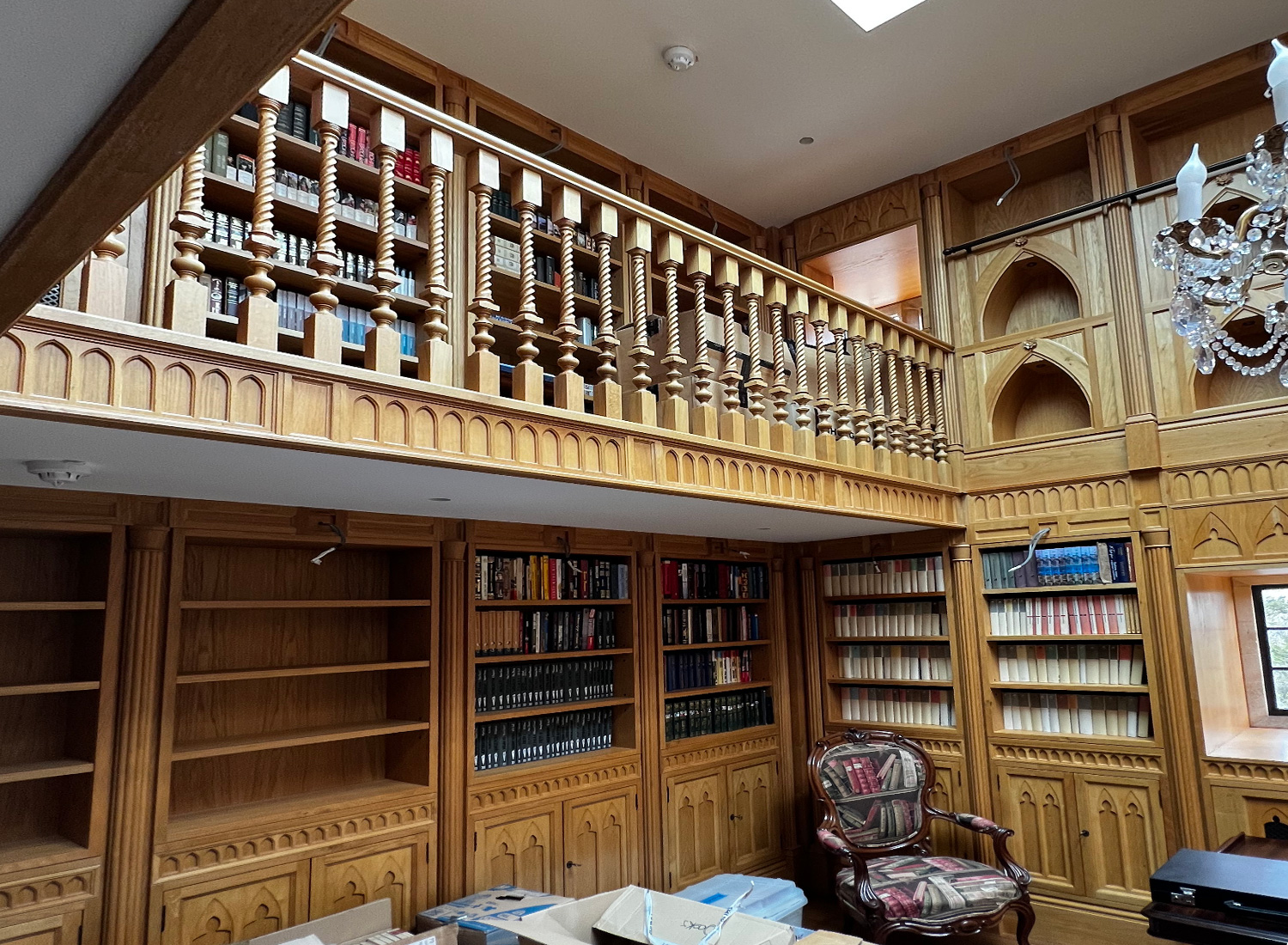
    Consider a Victorian townhouse in Knightsbridge. The period charm is undeniable, but the room proportions are often idiosyncratic, with sloping walls, purposeless recesses, and architectural quirks that defy standard furniture solutions. This is where bespoke joinery becomes not merely desirable but essential. A custom-fitted library wall or bedroom joinery can reclaim every square inch, drawing the eye toward genuine architectural beauty while providing intelligent storage that was previously impossible.

    The relationship between fitted joinery and spatial perception is profound. Unlike standalone furniture, which can fragment a room, thoughtfully conceived bespoke pieces create visual continuity. They allow the room itself to breathe as a unified composition rather than a collection of scattered objects.

    The Hallmarks of High-End Residential Joinery

    What separates truly exceptional joinery from the merely competent? It comes down to several interlocking elements.

    Precision Measurement and Installation

    The foundation of any bespoke joinery project is rigorous measurement. We don’t mean the casual tape-measure approach; we’re talking about detailed surveys that account for out-of-plumb walls, uneven floors, and the quirks that make each period property unique. A piece might be constructed to the millimetre, only to fail during installation because the room doesn’t meet modern building standards. Exceptional joinery firms account for this reality from the outset.

    Material Selection and Finishing

    The wood itself tells a story. High-end residential joinery typically specifies premium hardwoods, such as walnut, oak, and cherry, as well as bespoke veneers, chosen not only for their appearance but also for their stability and longevity. The finishing process is equally critical. A superior hand-applied lacquer or oil finish will develop character over decades, ageing gracefully rather than degrading. Paint finishes in luxury homes receive multiple coats and careful colour matching, often custom-mixed to complement architectural periods or interior schemes.

    Seamless Integration with Architecture

    The finest fitted joinery belongs to the room as if it emerged from the building itself. This requires understanding architectural language. In a period property, joinery should respect or reimagine existing cornicing, dados, and other period details. In contemporary homes, joinery can make cleaner statements, but still demands thoughtfulness about material choice, proportion, and scale.

    Functional Design

    Form and function must be inseparable in residential joinery. A beautifully crafted bookcase that can’t accommodate standard book heights, or a fitted wardrobe with drawer proportions that don’t suit actual storage needs, is merely sculptural. True bespoke joinery solves real-world problems, maximising storage in compact bedrooms, creating usable working surfaces in studies, or bringing order to sprawling home libraries.

    The London and Home Counties Context

    London and the surrounding counties present distinctive challenges and opportunities for residential joinery specialists. The concentration of period properties, Georgian townhouses, Victorian terraces, Edwardian villas, and Arts and Crafts homes demands joinery practitioners who understand historical context. A piece designed for a Grade I or II-listed drawing room in Belgravia requires different thinking than one for a contemporary apartment in Canary Wharf.

    The Home Counties bring their own character. Surrey and Berkshire are home to countless period family residences where thoughtfully conceived joinery can either honour original character or subtly modernise spaces without stripping away charm. The sprawling layouts and generous proportions of many country houses offer different opportunities for larger studies, extensive libraries, and extensive dressing rooms – all of which benefit from bespoke solutions.

    There’s also a cultural context. Clients in these regions tend to value heritage and longevity. They’re investing in homes they plan to live in for years, and they want fixtures and fittings that will outlast trends. This mindset favours bespoke joinery over quick, disposable solutions.

    Contemporary Trends in Bespoke Joinery

    The joinery landscape is evolving in interesting ways. While ornate Victorian revival remains popular in period homes, we’re seeing growing enthusiasm for what might be called “restrained luxury, high-quality materials and flawless execution applied to simpler, cleaner lines. Darker wood tones are experiencing a resurgence, particularly walnut and stained oak, often paired with soft, neutral surrounding colours.

    Multi-functional design is increasingly important. A fitted bedroom wall might incorporate a workspace, concealed storage, and a reading nook. Kitchen joinery extends into pantries and utility areas, creating a coherent aesthetic throughout service spaces. This reflects how modern families actually live with fewer formal rooms and greater emphasis on practical, adaptable spaces.

    Sustainability is becoming central to client conversations. There’s growing interest in responsibly sourced timbers, non-toxic finishes, and the longevity argument: a well-made, fitted piece that lasts fifty years is far more sustainable than replacing disposable furniture every five years.

    Smart integration of hidden charging points, integrated lighting, concealed cable management – is now expected in high-end joinery, though it must be implemented seamlessly. The technology should be invisible until needed.

    The Design Process: Collaboration and Expertise

    Genuine bespoke joinery emerges from a collaborative process. A skilled practitioner isn’t simply executing a designer’s concept; they’re bringing practical knowledge that shapes the outcome. They understand which details will weather well, which finishes will age beautifully, and which configurations will actually work in practice.

    At Reeve & Co Interiors, we typically begin with a thorough site visit, photography, and detailed measurements. We listen carefully to how clients actually inhabit their spaces. Does the study need a substantial desk, or is it mainly for display and reference? Will the bedroom wardrobe store hanging clothes, folded items, or both? These conversations inform every design decision, if not already completed by the interior designer or architect.

    The design development phase involves scaled drawings, material samples, and often mock-ups or prototypes for particularly complex pieces. We encourage clients to live with colour and finish samples in their own light, understanding that materials behave differently in different spaces.

    Investing in Quality

    There’s an uncomfortable truth about bespoke joinery: it costs more than off-the-shelf alternatives. But this isn’t a simple premium for luxury; it’s value derived from specificity. A custom-fitted wardrobe costs more than an assembled unit, partly because it’s better made and partly because it’s designed precisely for your room, your needs, and your aesthetic.

    This represents genuine value in several ways. First, the finished room works better, with storage that is actually accessible, proportions feel right, and the whole space functions as intended. Second, quality materials and execution age beautifully. A walnut fitted bookcase will develop patina and character over decades; an MDF off-the-shelf unit will simply age into obsolescence. Third, bespoke joinery enhances property value in a way mass-produced furniture never can. A discerning buyer immediately recognises the difference.

    Bringing Spaces to Life

    Walk through a well-designed London townhouse featuring thoughtful fitted joinery and you’ll notice something important: the joinery isn’t what you immediately see. Instead, you experience a room that works perfectly. The visual attention goes to the art on the walls, the light on the proportions, and the comfort of the arrangement. The joinery has done its job beautifully; it’s solved problems so effectively that it becomes invisible.

    That’s the mark of exceptional residential joinery. It enhances and enables life in a space without drawing attention to itself. It represents the accumulated knowledge of skilled craftspeople who understand wood, construction, spatial proportion, and design. It’s an investment in the daily experience of living well.

    If you’re considering how to refine a London home or country property in the Home Counties, bespoke fitted joinery offers possibilities that ready-made solutions cannot match. It’s about creating spaces that work as beautifully as they look, spaces that feel less decorated and more like home.

    Reeve & Co Interiors specialises in bespoke residential joinery for distinguished homes across London and the Home Counties. We bring precision craftsmanship, thoughtful design, and practical expertise to every project. Get in touch to discuss how fitted bespoke joinery can transform your space.

  • Embracing the Future: Five EV Car Chargers Installed at Reeve & Co Interiors

    Embracing the Future: Five EV Car Chargers Installed at Reeve & Co Interiors

    At Reeve & Co Interiors, we’re committed not just to creating beautiful  Joinery, but also to fostering a sustainable future. Recently, we took a significant step in that direction by installing five electric vehicle (EV) chargers at our workshops in suffolk. This initiative brings numerous benefits to our business, our customers, and our employees, positioning us as a leader in eco-friendly practices in the interior design industry.

    1. Enhancing Customer Experience

    One of the primary benefits of installing EV chargers is the enhancement of our customer experience. As electric vehicles become increasingly popular, our clients are looking for businesses that accommodate their needs. By providing charging stations, we’re not only making it more convenient for our customers to visit us, but we’re also sending a clear message that we care about sustainability. This aligns perfectly with the values of many of our clients who prioritize eco-conscious choices in their purchasing decisions.

    2. Attracting New Customers

    In addition to improving the experience for existing clients, our EV chargers serve as a magnet for new customers. Many people are actively seeking out businesses that support electric vehicle infrastructure. By making our facility EV-friendly, we’re appealing to a growing demographic of eco-conscious consumers. This can translate into increased foot traffic and potential sales, as more individuals choose to visit us knowing they can recharge their vehicles while exploring our offerings.

    3. Supporting Employee Wellbeing

    Our commitment to sustainability extends to our employees as well. By providing EV chargers, we’re encouraging our team members to consider electric vehicles as a viable option for their commutes. This not only promotes a healthier environment but also contributes to the well-being of our employees. Knowing they have a convenient charging option at work can alleviate stress and foster a sense of community among team members who share similar eco-friendly values.

    4. Aligning with Sustainable Business Practices

    Integrating EV chargers into our operations demonstrates our dedication to sustainability and responsible business practices. This not only improves our brand image but also helps us attract partnerships with other businesses and organizations that prioritize environmental responsibility. In an era where consumers are increasingly scrutinizing the practices of companies they support, being a forward-thinking business can set us apart from competitors.

    5. Contributing to a Greener Future

    Our investment in EV infrastructure is a commitment to contributing to a greener future. By supporting electric vehicles, we’re playing a part in reducing carbon emissions and promoting cleaner air. This initiative aligns with global efforts to combat climate change, and we believe it’s our responsibility as a business to lead by example. The more we can encourage sustainable practices, the more impact we can collectively have on the environment.

    Conclusion

    The installation of five EV chargers at Reeve & Co Interiors is more than just a practical upgrade; it’s a reflection of our values and commitment to sustainability. By enhancing customer experience, attracting new clientele, supporting our employees, aligning with sustainable practices, and contributing to a greener future, we’re not just investing in infrastructure—we’re investing in the future of our business and the community at large. We invite you to visit us, charge your vehicle, and experience firsthand how we’re blending beautiful design with eco-friendly practices. Together, we can make a difference. Please find us on the Monta EV Charging app.

  • Enhance Your Doors and Windows: A Guide to Joinery Finishes with Teknos oils and paints

    Enhance Your Doors and Windows: A Guide to Joinery Finishes with Teknos oils and paints

    At Reeve & Co Interiors Ltd our preferred supplier of paint and lacquer for exterior joinery coating is Teknos

    Introduction: In the realm of woodworking, the finishes you apply to your doors and windows are more than just aesthetic enhancements; they are crucial for protection against the elements and ensuring longevity. Teknos, a leading provider of high-quality coatings, offers a range of products tailored for joinery finishes, including AQUAPRIMER, ANTISTAIN and AQUATOP, and AQUA WOODEX from Teknos. In this guide, we’ll delve into each of these products and explore how they can elevate your joinery projects.

    Please see our last blog on timber, “Choosing the Finest Timber for Durable Exterior Doors and Windows“, we go in to the timbers that we use here at Reeve & Co Interiors, from oak that we finished with AQUA WOODEX wood oil to Accoya/  Tricoya, Frake Thermally Modified Timber and Utile wood that use AQUAPRIMER, ANTISTAIN and AQUATOP

    1. Teknos AQUAPRIMER: Teknos AQUAPRIMER serves as an excellent foundation for your joinery projects. Designed to penetrate deep into the wood substrate, this primer creates a stable base for subsequent coatings. Its water-based formulation ensures fast drying times, allowing you to proceed with your project efficiently. AQUAPRIMER enhances adhesion, minimizes grain raising, and provides excellent resistance to moisture, making it ideal for both interior and exterior applications.
    2. Teknos ANTISTAIN: Wooden doors and windows are susceptible to staining caused by tannins and extractives present in the wood. Teknos ANTISTAIN is specifically formulated to combat this issue. By effectively blocking the migration of tannins and other stains to the surface, ANTISTAIN helps maintain the pristine appearance of your joinery. Whether you’re working with hardwoods or softwoods, this product ensures consistent colouration and minimizes the risk of unsightly stains spoiling your finish.
    3. TEKNOL  AQUATOP: For a durable and visually appealing topcoat, TEKNOL AQUATOP is the go-to choice. This waterborne, acrylic-based coating offers superior protection against UV radiation, moisture, and mechanical wear. Its advanced formulation delivers excellent flow and levelling, resulting in a smooth and even finish. AQUATOP is available in a wide range of colours, allowing you to achieve your desired aesthetic while ensuring long-term durability for your doors and windows.
    4. Teknos AQUA WOODEX wood oil: When it comes to exterior joinery, Teknos AQUA WOODEX is the ultimate solution for enhancing both appearance and performance. This translucent wood finish penetrates deep into the substrate, enriching the natural beauty of the wood while providing robust protection against weathering and fungal decay. AQUA WOODEX is available in various finishes, including matt, satin, and gloss, allowing you to tailor the sheen level to your preference. Whether you’re refinishing existing doors and windows or embarking on new projects, AQUA WOODEX offers unmatched versatility and durability.

    Conclusion: Achieving exceptional joinery finishes requires the right combination of products tailored to your specific needs. With Teknos AQUAPRIMER, ANTISTAIN, TEKNOL AQUA AQUATOP, and AQUA WOODEX, you can elevate the appearance and durability of your doors and windows with confidence. Whether you’re a seasoned professional or a DIY enthusiast, Teknos coatings provide the performance and reliability you can trust. Invest in Teknos joinery finishes today and unlock the full potential of your woodworking projects.

    For the colour on offer, for opaque finishings colour matches from any paint company, RAL colours, or these colours linked? For translucent finishings, see colours here.

    Please call 01449 710500 for further help with timbers and the finish of the exterior joinery.

  • “Choosing the Finest Timber for Durable Exterior Doors and Windows”

    “Choosing the Finest Timber for Durable Exterior Doors and Windows”

    Introduction:

    When it comes to enhancing the aesthetics and durability of your home’s exterior, the choice of timber for doors and windows plays a pivotal role. Investing in high-quality wood adds a touch of natural beauty and ensures longevity and resilience against the elements. In this guide, we at Reeve and Co Interiors will explore some of the best timber choices for crafting exterior doors and windows that not only withstand the test of time but also elevate the overall appeal of your home.

    Sapele: – Normally primed/painted (price point ££)

    • Sapele is an exotic hardwood that shares similarities with mahogany, offering a rich, reddish-brown colour with a distinctive ribbon-like grain pattern.
    • Its natural resistance to decay and insects and its stunning appearance make Sapele a popular choice for crafting high-quality exterior doors and windows.
    • This is the cheapest option we do at Reeve & Co Interiors.
    • This can be more prone to movement through the weather season in the UK.

    Teak:– Normally, an exterior oil finish (price point £££££££££)

    • Really hard to get hold of, and is by far the most expensive.
    • Teak is renowned for its exceptional durability and resistance to decay, making it a prime choice for exterior applications.
    • With natural oils protecting against water damage and insects, teak is an excellent option for doors and windows exposed to varying weather conditions.
    • Additionally, teak’s rich colour and grain patterns add a touch of timeless elegance to any home.
    • It is not suitable for painting due to oils within the timber.

    Utile:– Normally primed/painted (price point £££) (we use this our frames)

    • Utile, also known as Sipo or African Mahogany, is a hardwood originating from tropical Africa. This timber has gained recognition for its strength, stability, and consistent grain pattern, making it an excellent choice for crafting high-quality exterior doors and windows. Utile showcases a beautiful range of colours from pinkish-brown to reddish-brown, adding warmth and sophistication to your home’s exterior.
    • One of the notable features of Utile is its sustainability; it is often harvested from well-managed forests, aligning with responsible forestry practices. This ensures you get a durable and aesthetically pleasing material and contributes to preserving tropical forests.
    • Utile’s resistance to decay and insects, combined with its stability and ease of workability, makes it a reliable option for exterior applications. Whether you are drawn to its rich colour or appreciate its sustainable sourcing, choosing Utile for your doors and windows allows you to enjoy both the visual appeal and environmental conscientiousness.
    • This is a very popular choice for our doors and windows due to price and timber characteristics.

    Iroko: – Normally an exterior oil finish (price point £££)

    • Iroko is a hardwood native to Africa known for its strength and durability. It boasts a beautiful golden to medium brown colour that darkens with age, adding warmth to the exterior of your home.
    • Iroko is resistant to decay and insect infestations, making it a reliable choice for doors and windows exposed to the elements.
    • This is a popular choice for larger items like the external driveway gate we make.

    Vancouver Island Douglas Fir: – Normally, primed/painted (price point ££££)

    • Vancouver Island Douglas Fir, native to the Pacific Northwest, is renowned for its exceptional strength and versatility. This local timber option boasts a warm, reddish-brown colour with a distinctive grain pattern that adds a touch of rustic charm to your home.
    • Known for its natural resistance to decay and insects, Vancouver Island Douglas Fir is an excellent choice for crafting durable exterior doors and windows.
    • This timber is well-suited to the coastal climate of Vancouver Island, making it a popular choice for homeowners looking for reliable exterior wood for doors and windows. The tight growth rings of Douglas Fir contribute to its stability and dimensional strength, ensuring that doors and windows crafted from this wood stand up well to the challenges of changing weather conditions.
    • Consider Vancouver Island Douglas Fir if you want the durability needed for exterior applications. Its availability in the region also contributes to its sustainability, making it an eco-friendly choice for homeowners prioritising local materials.
    • Despite being a softwood, this is an excellent timber for doors and windows and is commonly used in many exterior windows found in London that were made many years ago.

    European Oak – Normally an exterior oil finish (price point ££££)

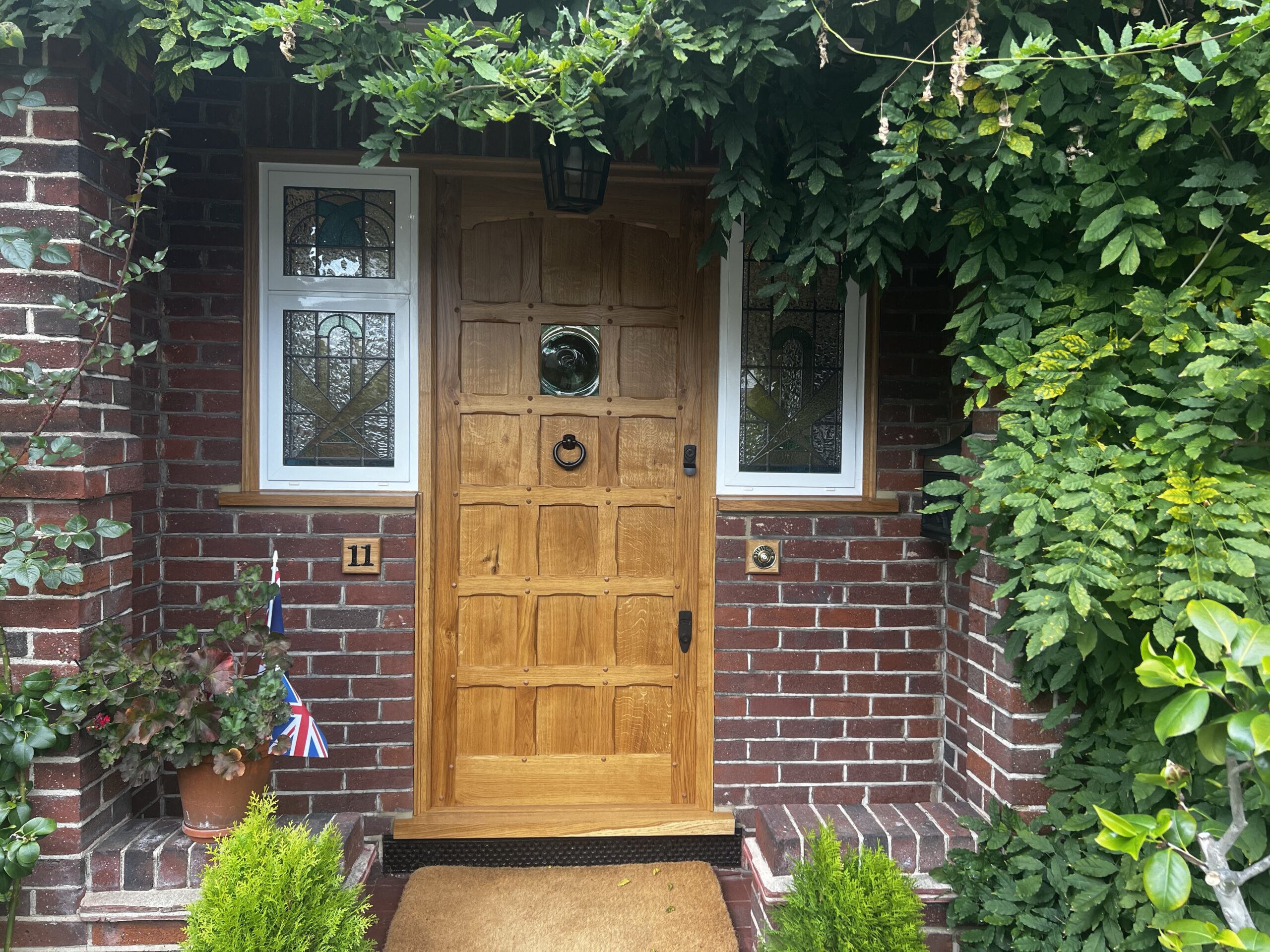
    • European Oak, a classic choice for centuries, is revered for its timeless beauty and robust qualities, making it an excellent timber for crafting exterior doors and windows. Hailing from Europe, this hardwood species features a distinctive grain pattern and a warm, golden-brown colour that ages to the classic silver oak colour we see on many homes today unless maintenance is maintained.
    • Known for its natural durability and resistance to decay, European Oak is particularly well-suited for outdoor applications. It can withstand various weather conditions, making it an ideal choice for doors and windows that are exposed to the elements. Additionally, European Oak possesses excellent dimensional stability, minimising the risk of warping or shrinking over time.
    • One of the appealing aspects of European Oak is its versatility in design. Whether you prefer a modern or classic aesthetic, European Oak complements a wide range of architectural styles. Its adaptability to different finishes allows you to achieve the desired look, whether you opt for a natural, rustic appearance or a more contemporary finish.
    • European Oak is often chosen for its longevity, with many structures built centuries ago still showcasing the enduring beauty of this timber. Its reputation for strength and reliability makes it a favourite among craftsmen and homeowners alike.

    Laminated Timber: Primed/painted (price point £££££)

    • Laminated timber, often referred to as engineered wood or laminated veneer lumber (LVL), has gained popularity for its superior strength and stability. This innovative material is crafted by bonding multiple layers of wood together with adhesives, creating a composite that surpasses the natural characteristics of solid timber. Laminated timber is an intelligent choice for exterior doors and windows due to its enhanced structural integrity and resistance to warping or twisting.
    • The timber we offer Laminated is European Oak, Sapele and Red Grandis timber.
    • One of the critical advantages of laminated timber is its consistent quality. Manufacturers can eliminate defects and weaknesses often found in natural timber by layering and bonding wood in a controlled environment.
    • Laminated timber excels in dimensional stability, making it less prone to expansion or contraction with changes in temperature and humidity. This feature is particularly important for exterior applications where exposure to varying weather conditions is inevitable. The engineered construction of laminated timber ensures that your doors and windows maintain shape over time, contributing to long-term performance.
    • Choosing laminated timber for your exterior doors and windows is a decision for both strength and sustainability. The engineered excellence of laminated timber ensures that your home not only showcases the beauty of wood but also benefits from a material designed for lasting durability and minimal maintenance.

    Accoya: Finished in always, natural left, exterior oil and painted (price point £££££) – (we prefer this timber for our doors)

    • Accoya stands out as a revolutionary timber choice that combines the beauty of natural wood with unparalleled durability and sustainability. What sets Accoya apart is its innovative acetylation process, a non-toxic treatment that transforms sustainably sourced softwood (Radiata Pine Trees) into a material with exceptional strength and resistance.
    • The acetylation process alters the cellular structure of the wood, reducing its ability to absorb water and making it highly resistant to decay, insects, and fungal attacks. Accoya is ideal for exterior doors and windows, especially in challenging weather conditions.
    • One of the critical advantages of Accoya is its stability. Unlike traditional woods that may expand or contract with changes in humidity, Accoya maintains its shape and dimensions, reducing the risk of warping or twisting over time. This stability ensures that your doors and windows continue functioning smoothly and look stunning for years.
    • Moreover, Accoya is an environmentally friendly choice. The timber used in the production of Accoya comes from sustainable sources, and the acetylation process uses only natural, renewable resources. This commitment to sustainability makes Accoya an excellent option for homeowners who prioritise eco-conscious choices without compromising quality.
    • In terms of aesthetics, Accoya boasts a consistent and attractive appearance. Its light colour provides a perfect canvas for various finishes, allowing you to customise the look of your doors and windows to complement your home’s design.
    • By choosing Accoya for your exterior doors and windows, you invest in timber that elevates your home’s beauty and reflects a commitment to environmental responsibility and long-lasting quality. Accoya represents a harmonious blend of innovation, sustainability, and enduring elegance.

    Frake Thermally Modified Timber: Finished in always, natural left, exterior oil and painted (price point £££££) (we prefer this for our doors)

    • Frake thermally modified timber (Limba, hardwood) is a distinctive choice for exterior doors and windows, offering a combination of enhanced durability and a unique aesthetic appeal. This is very similar to Accoya and undergoes a specialised thermal modification process subjected to high temperatures in a controlled environment. This thermal treatment enhances the wood’s resistance to decay, insects, and moisture, making it an excellent option for outdoor applications.
    • One of the notable characteristics of Frake timber is its beautiful caramel-to-rich brown colour that develops during the thermal modification process. This unique colouration adds a touch of warmth and sophistication to the exterior of your home, creating a visually appealing contrast to other timber choices.
    • The thermal modification process also improves the dimensional stability of Frake timber, reducing its susceptibility to warping, shrinking, or swelling in response to environmental changes. This makes Frake an ideal choice for regions with varying weather conditions, ensuring that your doors and windows remain structurally sound and aesthetically pleasing over time.
    • Beyond its durability and stability, Frake thermally modified timber is often sourced from responsibly managed forests, aligning with sustainable practices. Choosing Frake allows you to enjoy the benefits of natural wood while contributing to environmental conservation efforts.
    • Incorporating Frake thermally modified timber into your exterior design provides a robust and distinctive material and adds a touch of contemporary elegance to your home. With its unique colour profile and enhanced durability, Frake stands out as a modern and environmentally conscious choice for exterior doors and windows.


    Conclusion:

    When selecting timber for your exterior doors and windows, it’s crucial to prioritise both aesthetics and durability. The nine choices above represent a spectrum of options catering to different preferences and sustainability concerns. By investing in suitable timber for your doors and windows, you not only enhance the beauty of your home but also ensure that your doors and windows withstand the test of time, providing lasting value for years to come. Our preferred timber for painting is Vancouver Island Douglas Fir, Accoya or Utile, and for an exterior oiled finish then, we recommend Oak. We also hand-select the timber to use quarter saw in the door style so they are kept straight and true, not just on delivery and fitting but for years to come – this is why customers return to us repeatedly.

  • The Art of Securing Firearms: Exploring Bespoke Gun Cabinets

    The Art of Securing Firearms: Exploring Bespoke Gun Cabinets

    Introduction: Owning firearms comes with great responsibility, and ensuring their safe storage is paramount. Bespoke timber gun cabinets offer the perfect solution when it comes to safeguarding your firearms in style. Crafted with precision and attention to detail, these custom-made cabinets provide secure storage and showcase the beauty of your guns. In this blog post, we will delve into the world of bespoke gun cabinets, highlighting their benefits, unique features, and why they are the ultimate choice for firearm enthusiasts.

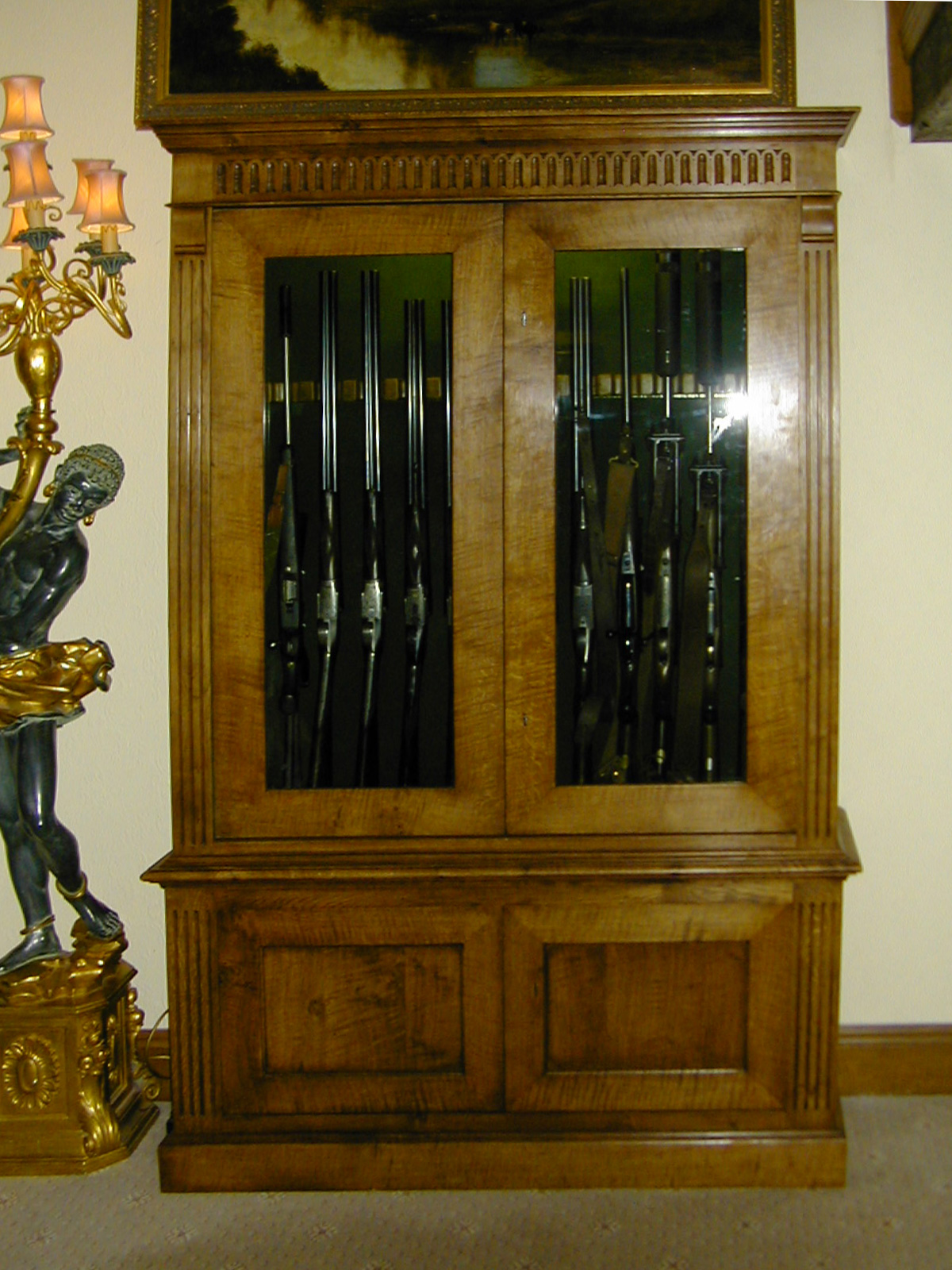
    1. Reeve & Co Interiors Fully Bespoke and Customized Security Solutions: Bespoke gun cabinets are designed to exceed specific security requirements. Whether you own a single firearm or an extensive collection, these cabinets can be tailored to accommodate your needs. They offer various storage options, including dedicated slots, racks, and compartments, ensuring that each firearm is securely placed. Additionally, bespoke gun cabinets can have advanced security features such as reinforced doors, combination locks, electronic access, and integrated alarm systems, providing optimal protection against theft and unauthorized access.
    2. Exquisite Craftsmanship: Our bespoke gun cabinets are a true testament to outstanding craftsmanship. Skilled artisans work with precision and meticulous attention to detail, ensuring that each cabinet is a work of art for your space and room available. These cabinets are often crafted from high-quality hardwoods, such as oak, mahogany, or walnut, providing durability and exuding elegance and sophistication. The woodworking techniques employed result in fine joinery, intricate carvings, and luxurious finishes, elevating the aesthetic appeal of the cabinet and complementing the beauty of your firearms. To see our range of standard models, see here.
    3. Displaying Elegance: Bespoke gun cabinets are not just about security; they also serve as showcases for your firearms. The cabinets are designed to display your collection in a visually appealing manner, allowing you to admire and appreciate younguns even when they are not in use. Laminated ballistic 21.5 mm thick glass panels and lighting options can be incorporated, accentuating the beauty and craftsmanship of your firearms while ensuring they remain protected and secure.
    4. Customization Options: One of the standout features of bespoke gun cabinets is the ability to customize every aspect to suit your preferences. From the size and layout of the cabinet to the choice of wood, finishes, and detailing that you may specify, you have complete control over the design process. Whether you prefer a traditional or contemporary style, the cabinet can be tailored to match your aesthetic preferences and complement your home’s decor or study. Custom engravings, personalized nameplates, or family crests can also be added, giving the cabinet a truly unique and personalized touch.
    5. Compliance with Regulations: In all police constabulary, there are strict regulations and legal requirements for storing firearms. Bespoke gun cabinets are designed to meet and exceed these regulations, ensuring your firearms are stored safely and compliant with the law. Whether it’s the thickness of the cabinet walls, the locking mechanisms, antic cut pins, folded doors or the construction materials, these cabinets are built to provide the highest level of security while adhering to legal requirements.

    Conclusion: Bespoke gun cabinet epitomizes secure and stylish firearm storage. With their customized security solutions, exquisite craftsmanship, and elegant displays, these cabinets offer firearm enthusiasts the perfect blend of functionality and aesthetics. Whether you own a treasured family heirloom or a collection of firearms, a bespoke gun cabinet provides peace of mind, knowing that your firearms are securely stored and beautifully showcased. Invest in a bespoke gun cabinet to protect your firearms and add a touch of sophistication to your home or study.