
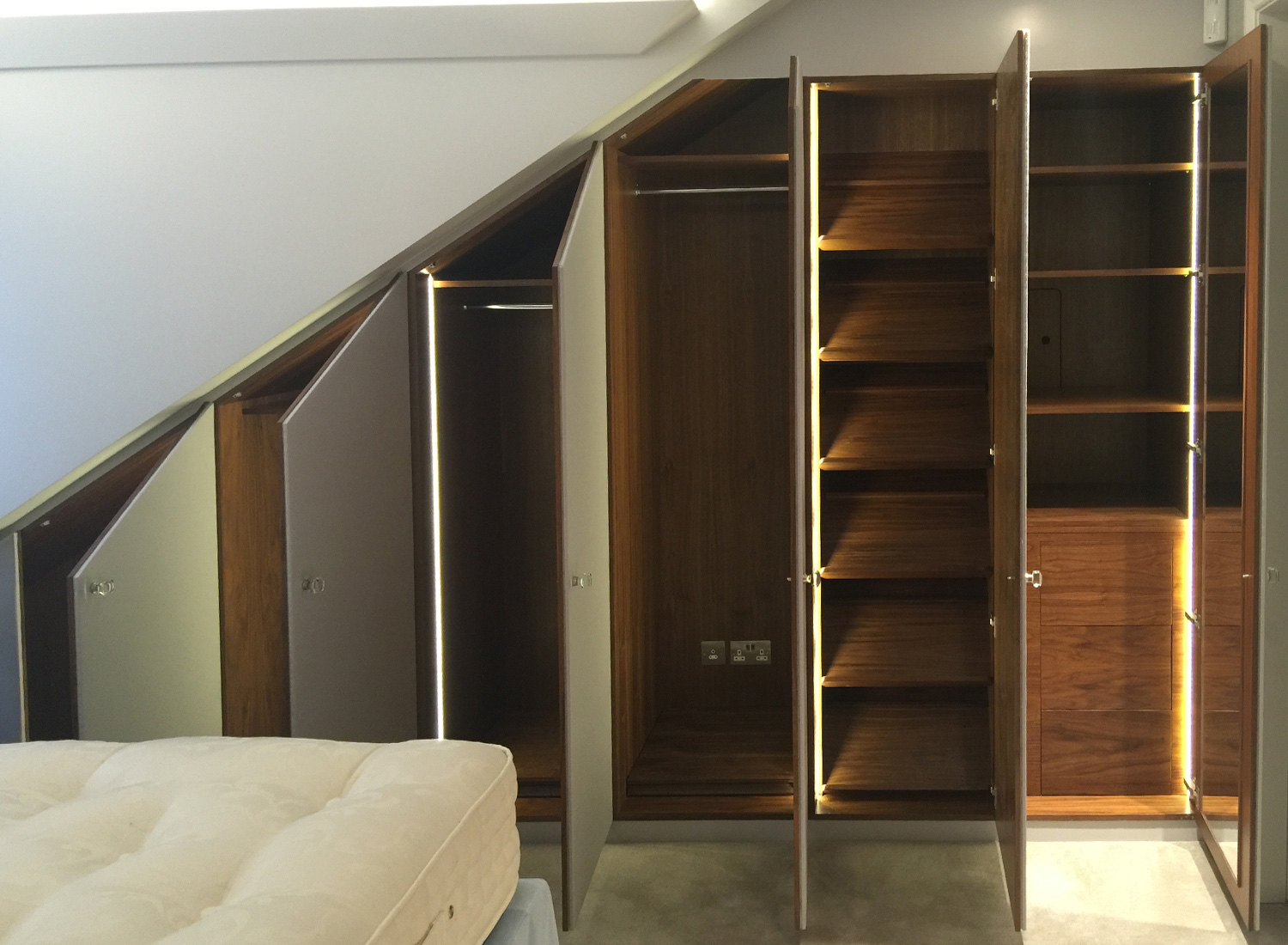
The Problem with Standard Solutions
If you’re an architect or interior designer who’s ever worked with a client in a Georgian townhouse with uneven walls, or a Victorian property where every ceiling height shifts by a centimetre, not millimetres, you already know the frustration. Off-the-shelf kitchen or joinery companies arrive with their standard 600mm units. High street furniture showrooms offer limited finishes in preset dimensions. None of it quite works. And your design, the one that would solve the client’s storage problem elegantly, that would align perfectly with the period character, that would work with the structural realities of the space, gets compromised.
Good bespoke joinery from Reeve & Co interiors changes that equation entirely.
What Architects and Designers Are Actually Looking For
From conversations with practices across London and the Home Counties, certain priorities emerge consistently when designers specify joinery:
Precision that matches the design intent. You’ve spent weeks refining a detail. You’ve resolved how a run of wardrobes will integrate with a fireplace, how shelving will frame a window, where storage needs to hide and where it becomes a design feature. You need a workshop that understands technical drawings at the millimetre level, not as approximate guidance, but as specification.
The ability to work with constraints. Real houses have structural quirks: floors that slope, walls that lean, and ceiling heights that vary. Rather than fighting these, true bespoke joinery works with them. A kitchen isn’t squeezed into standard dimensions; it’s designed specifically for the space and the way your client actually lives.
Collaboration, not catalogue browsing. The best bespoke relationships don’t start with a supplier showing their standard options. They start with detailed conversations: How does your client use the space? What materials will work with the interior you’re creating? What finishes will stand the test of time? What’s the budget framework? This dialogue informs the design from the start.
Materials and finishes that enhance the design. A warehouse of MFC and veneered board isn’t enough. You need access to solid wood, commissioning of specific finishes, hardware that matches your aesthetic, and the ability to specify materials that won’t disappoint in five years’ time.
Realistic timescales and transparent costs. Projects with architects and designers have different rhythms: phased delivery, integration with other trades, and site coordination. A joinery partner needs to understand construction logistics, provide honest estimates upfront (including what’s in and out of scope), and deliver on schedule without surprises.
What Good Joinery Actually Adds to a Project
There’s a reason leading interior designers and architects consistently work with the same bespoke makers. The joinery isn’t just functional,”it transforms how a space feels and performs.
Consistency and coherence. Bespoke allows every custom element,” wardrobes, shelving, media walls, kitchen cabinetry, ”to speak the same visual language. Finishes, hardware, proportions, and details align across the entire project.
Solution-focused design. A client has odd corner spaces, unusual storage needs, or awkward dimensions. Rather than accepting compromise, bespoke joinery becomes the solution. It fills corners. It maximises storage. It makes the space work harder and feel more intentional.
Period sensitivity with modern function. Renovation projects especially benefit. A proper joinery partner understands how to design new work that respects the character of a period property’s proportions, details, and materials while delivering modern storage and functionality.
Longevity and value. Quality joinery, properly specified and well-made, improves with age. It also increases property value and, importantly, improves how clients live in their homes day to day.
Finding the Right Partner
When you’re looking for a bespoke joinery supplier to work with your projects, the right firm shares like us at Reeve & Co interiors has these characteristics:
Technical competence. They work from detailed drawings. They understand architectural specifications. They’ve managed complex projects with tight tolerances. Ask about their process: do they provide CAD drawings? 3D visualisations? Do they conduct site surveys themselves?
A strong portfolio in your sector. Look at the residential work they’ve done. Can they show examples of period properties? Kitchens? Fitted wardrobes and dressing rooms? Libraries and media rooms? The best partners have breadth.
Collaborative process. The initial conversations should feel consultative, not transactional. They should ask good questions about your design intent, your client’s lifestyle, the materiality you’re pursuing. They should be willing to iterate on designs.
Transparency on scope and cost. A realistic quote will break down what’s included: design, manufacture, installation, contingency. They’ll be clear about what changes cost and when. No surprises.
A real workshop. Visit if possible. Meet the people making the work. Modern machinery matters, but so does the skill and care of the team. A good workshop feels like a place where people take pride in precision.
Why This Matters Now
The market for bespoke joinery is growing precisely because designers and architects are demanding better solutions. Off-the-shelf no longer cuts it in the high-end residential market. Your clients expect and deserve joinery that’s designed for them, not adapted from a catalogue.
The right bespoke partner becomes an extension of your practice. We at Reeve & Co interiors understand your standards. We deliver on time. We solve problems creatively. And most importantly, we make your designs better.
Send an email to design@reeveco.atec.co.uk to get further help form us at Reeve & Co interiors
Leave a Reply