
The Art of Bespoke Residential Joinery: Crafting Timeless Spaces in London and the Home Counties
When you step into a room that feels right, “where every corner serves a purpose, where materials whisper quality, and where light falls precisely where it should”, chances are you’re experiencing the thoughtful work of skilled residential joinery. At Reeve & Co Interiors, we believe that truly exceptional homes aren’t built on grand gestures alone; they’re refined through meticulous attention to detail, beginning with the fixtures and fittings that make up the fabric of everyday living.
Fitted bespoke joinery represents something increasingly rare in modern homes: the marriage of precision craftsmanship with deeply personal design. It’s the difference between a space that works and a space that sings.
Why Bespoke Joinery Matters
Over the past five years, we’ve noticed a distinct shift in how affluent homeowners in London and the Home Counties approach their interiors. The days of forcing boxy, mass-produced furniture into awkwardly proportioned rooms are fading. Today’s discerning clients understand that a properly designed, fitted piece doesn’t just occupy space, it transforms it.
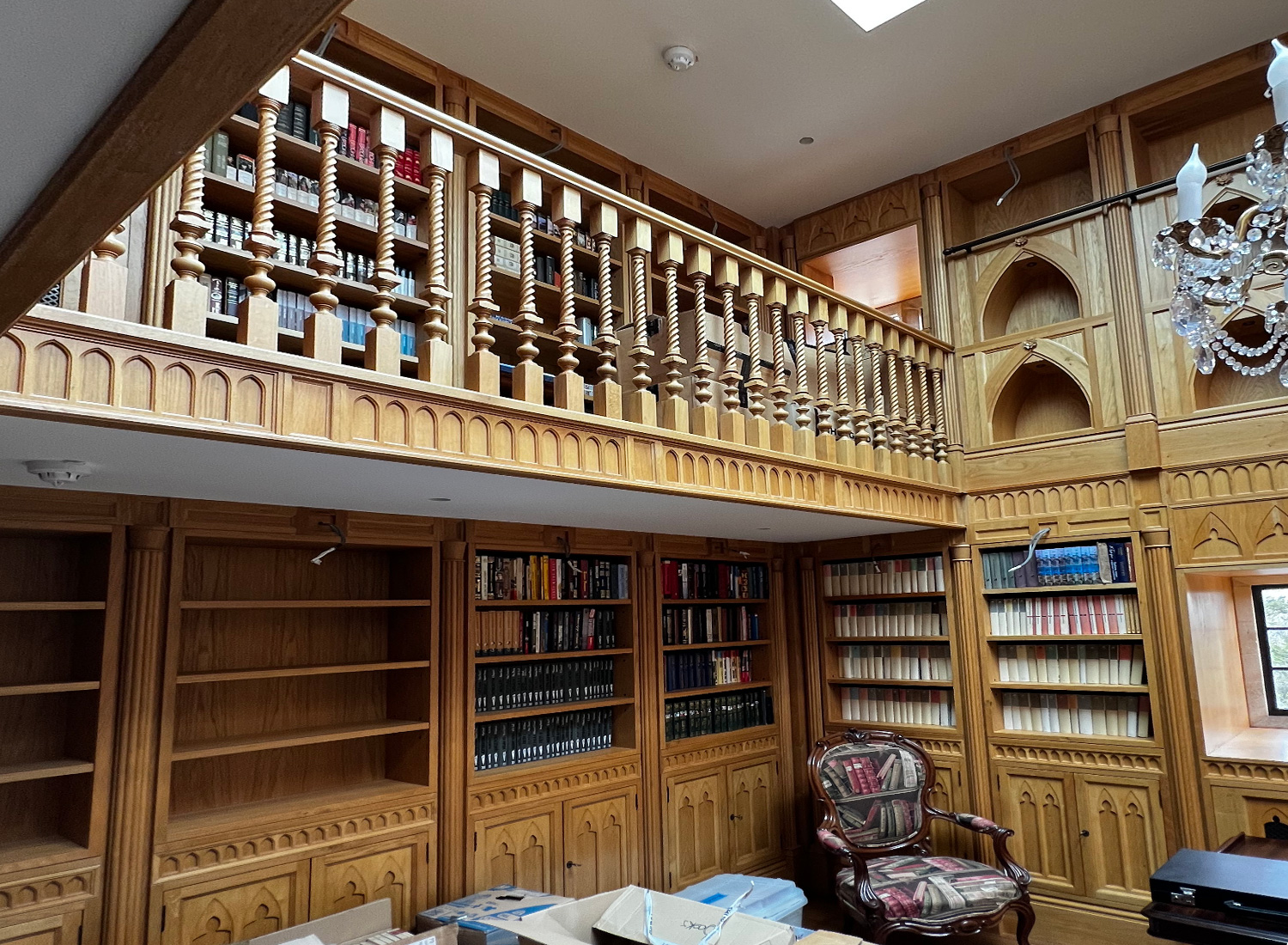
Consider a Victorian townhouse in Knightsbridge. The period charm is undeniable, but the room proportions are often idiosyncratic, with sloping walls, purposeless recesses, and architectural quirks that defy standard furniture solutions. This is where bespoke joinery becomes not merely desirable but essential. A custom-fitted library wall or bedroom joinery can reclaim every square inch, drawing the eye toward genuine architectural beauty while providing intelligent storage that was previously impossible.
The relationship between fitted joinery and spatial perception is profound. Unlike standalone furniture, which can fragment a room, thoughtfully conceived bespoke pieces create visual continuity. They allow the room itself to breathe as a unified composition rather than a collection of scattered objects.
The Hallmarks of High-End Residential Joinery
What separates truly exceptional joinery from the merely competent? It comes down to several interlocking elements.
Precision Measurement and Installation
The foundation of any bespoke joinery project is rigorous measurement. We don’t mean the casual tape-measure approach; we’re talking about detailed surveys that account for out-of-plumb walls, uneven floors, and the quirks that make each period property unique. A piece might be constructed to the millimetre, only to fail during installation because the room doesn’t meet modern building standards. Exceptional joinery firms account for this reality from the outset.
Material Selection and Finishing
The wood itself tells a story. High-end residential joinery typically specifies premium hardwoods, such as walnut, oak, and cherry, as well as bespoke veneers, chosen not only for their appearance but also for their stability and longevity. The finishing process is equally critical. A superior hand-applied lacquer or oil finish will develop character over decades, ageing gracefully rather than degrading. Paint finishes in luxury homes receive multiple coats and careful colour matching, often custom-mixed to complement architectural periods or interior schemes.
Seamless Integration with Architecture
The finest fitted joinery belongs to the room as if it emerged from the building itself. This requires understanding architectural language. In a period property, joinery should respect or reimagine existing cornicing, dados, and other period details. In contemporary homes, joinery can make cleaner statements, but still demands thoughtfulness about material choice, proportion, and scale.
Functional Design
Form and function must be inseparable in residential joinery. A beautifully crafted bookcase that can’t accommodate standard book heights, or a fitted wardrobe with drawer proportions that don’t suit actual storage needs, is merely sculptural. True bespoke joinery solves real-world problems, maximising storage in compact bedrooms, creating usable working surfaces in studies, or bringing order to sprawling home libraries.
The London and Home Counties Context
London and the surrounding counties present distinctive challenges and opportunities for residential joinery specialists. The concentration of period properties, Georgian townhouses, Victorian terraces, Edwardian villas, and Arts and Crafts homes demands joinery practitioners who understand historical context. A piece designed for a Grade I or II-listed drawing room in Belgravia requires different thinking than one for a contemporary apartment in Canary Wharf.
The Home Counties bring their own character. Surrey and Berkshire are home to countless period family residences where thoughtfully conceived joinery can either honour original character or subtly modernise spaces without stripping away charm. The sprawling layouts and generous proportions of many country houses offer different opportunities for larger studies, extensive libraries, and extensive dressing rooms – all of which benefit from bespoke solutions.
There’s also a cultural context. Clients in these regions tend to value heritage and longevity. They’re investing in homes they plan to live in for years, and they want fixtures and fittings that will outlast trends. This mindset favours bespoke joinery over quick, disposable solutions.
Contemporary Trends in Bespoke Joinery
The joinery landscape is evolving in interesting ways. While ornate Victorian revival remains popular in period homes, we’re seeing growing enthusiasm for what might be called “restrained luxury, high-quality materials and flawless execution applied to simpler, cleaner lines. Darker wood tones are experiencing a resurgence, particularly walnut and stained oak, often paired with soft, neutral surrounding colours.
Multi-functional design is increasingly important. A fitted bedroom wall might incorporate a workspace, concealed storage, and a reading nook. Kitchen joinery extends into pantries and utility areas, creating a coherent aesthetic throughout service spaces. This reflects how modern families actually live with fewer formal rooms and greater emphasis on practical, adaptable spaces.
Sustainability is becoming central to client conversations. There’s growing interest in responsibly sourced timbers, non-toxic finishes, and the longevity argument: a well-made, fitted piece that lasts fifty years is far more sustainable than replacing disposable furniture every five years.
Smart integration of hidden charging points, integrated lighting, concealed cable management – is now expected in high-end joinery, though it must be implemented seamlessly. The technology should be invisible until needed.
The Design Process: Collaboration and Expertise
Genuine bespoke joinery emerges from a collaborative process. A skilled practitioner isn’t simply executing a designer’s concept; they’re bringing practical knowledge that shapes the outcome. They understand which details will weather well, which finishes will age beautifully, and which configurations will actually work in practice.
At Reeve & Co Interiors, we typically begin with a thorough site visit, photography, and detailed measurements. We listen carefully to how clients actually inhabit their spaces. Does the study need a substantial desk, or is it mainly for display and reference? Will the bedroom wardrobe store hanging clothes, folded items, or both? These conversations inform every design decision, if not already completed by the interior designer or architect.
The design development phase involves scaled drawings, material samples, and often mock-ups or prototypes for particularly complex pieces. We encourage clients to live with colour and finish samples in their own light, understanding that materials behave differently in different spaces.
Investing in Quality
There’s an uncomfortable truth about bespoke joinery: it costs more than off-the-shelf alternatives. But this isn’t a simple premium for luxury; it’s value derived from specificity. A custom-fitted wardrobe costs more than an assembled unit, partly because it’s better made and partly because it’s designed precisely for your room, your needs, and your aesthetic.
This represents genuine value in several ways. First, the finished room works better, with storage that is actually accessible, proportions feel right, and the whole space functions as intended. Second, quality materials and execution age beautifully. A walnut fitted bookcase will develop patina and character over decades; an MDF off-the-shelf unit will simply age into obsolescence. Third, bespoke joinery enhances property value in a way mass-produced furniture never can. A discerning buyer immediately recognises the difference.
Bringing Spaces to Life
Walk through a well-designed London townhouse featuring thoughtful fitted joinery and you’ll notice something important: the joinery isn’t what you immediately see. Instead, you experience a room that works perfectly. The visual attention goes to the art on the walls, the light on the proportions, and the comfort of the arrangement. The joinery has done its job beautifully; it’s solved problems so effectively that it becomes invisible.
That’s the mark of exceptional residential joinery. It enhances and enables life in a space without drawing attention to itself. It represents the accumulated knowledge of skilled craftspeople who understand wood, construction, spatial proportion, and design. It’s an investment in the daily experience of living well.
If you’re considering how to refine a London home or country property in the Home Counties, bespoke fitted joinery offers possibilities that ready-made solutions cannot match. It’s about creating spaces that work as beautifully as they look, spaces that feel less decorated and more like home.
Reeve & Co Interiors specialises in bespoke residential joinery for distinguished homes across London and the Home Counties. We bring precision craftsmanship, thoughtful design, and practical expertise to every project. Get in touch to discuss how fitted bespoke joinery can transform your space.
Leave a Reply